

From Conventional Mirrors to Smart LC Rearview Mirrors: Key Design Considerations Behind Modern Automotive Mirrors
Cover lens geometry, surface treatment, ITO glass thickness and film choices, and how each trades appearance, weight and cost.
On this page
Insights from Current LC Rearview Mirror Projects – by Lily Liang
Special thanks to Alex Wang, Jeff Lin, and Henry Lin, from the GoWorld team for their valuable support and contributions throughout these projects.
The automotive cockpit is undergoing a massive digital evolution, and the rearview mirror is no longer just a simple piece of glass. Today, it is a high-tech smart display balancing sleek design, advanced electronics, and strict optical performance.
Key takeaways
- A 2.5D cover lens gives a smoother, more integrated look than a flat 2D lens, at the cost of higher manufacturing complexity and component cost.
- The GoWorld LC dimming mirror module lists about 20 ms dimming response, 80% transmittance, 40-45% reflectivity in mirror mode and about 10% in anti-glare mode.
- Mirror silver coating gives the most seamless mirror appearance in mirror mode and costs slightly more than silk printing.
- Thinner ITO glass reduces weight and optical distance; 0.25t glass lowers yield and raises cost.
- A cost-effective baseline: 1.8 mm flat cover lens, silk printing, standard LC ITO glass and RPM optical film.
Evolution of Automotive Rearview Mirrors
As automotive interiors become increasingly digitalized, rearview mirrors are no longer simple reflective surfaces. Today’s smart mirrors can integrate LCD displays, cameras, liquid crystal dimming technology, and various optical enhancement materials to improve both safety and user experience.

The design challenge is finding the right balance between:
- Premium appearance
- Optical performance
- Weight reduction
- Manufacturing yield
- Cost competitiveness
GoWorld LC Mirror Module: See More. Drive Safer
Turn every drive into a smarter, safer experience. The GoWorld LC Mirror Module transforms the ordinary rearview mirror into an intelligent driving companion, delivering crystal-clear visibility, automatic glare protection, and a built-in smart display, all in one sleek, factory-style design.
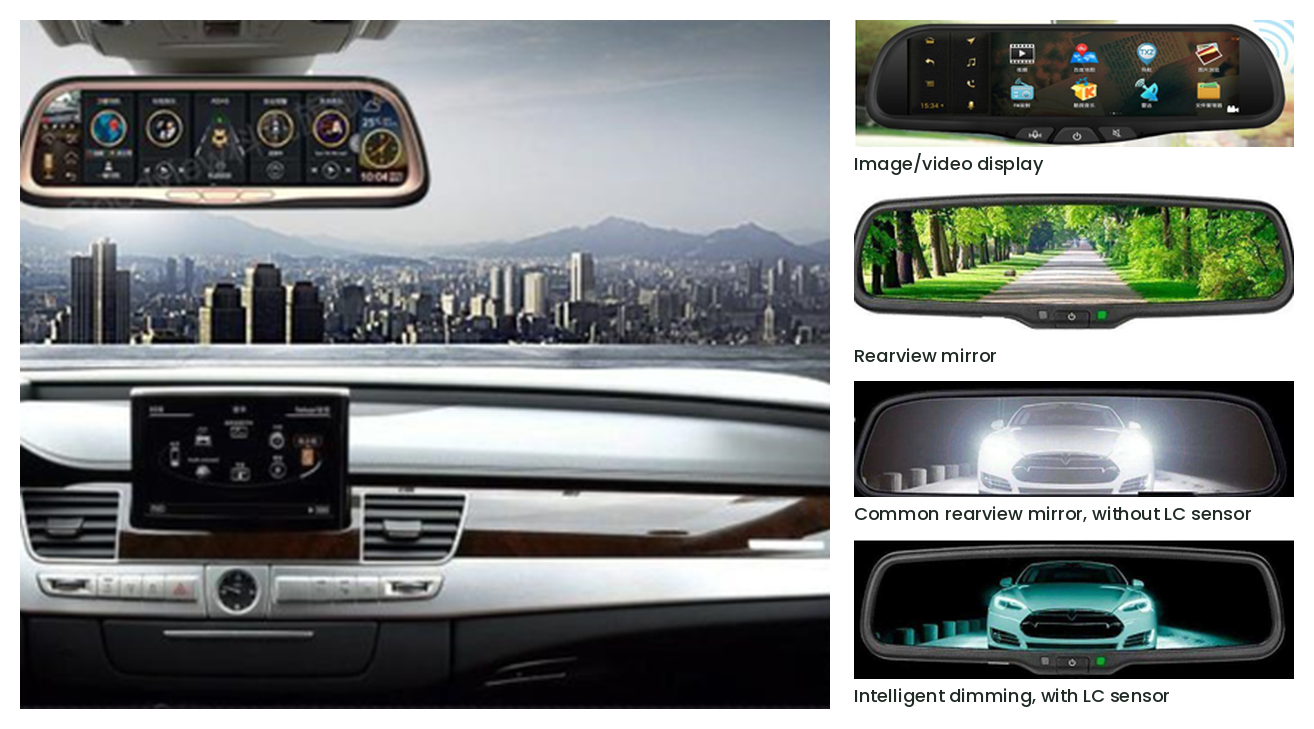
Performance You Can See, Reliability You Can Trust
Engineered for the demands of modern vehicles, the GoWorld LC dimming mirror delivers an exceptionally clear view in bright daylight and a comfortable, glare-free view at night. With fast response, natural color, and automotive-grade durability, it turns the rearview mirror into a true smart-driving component.
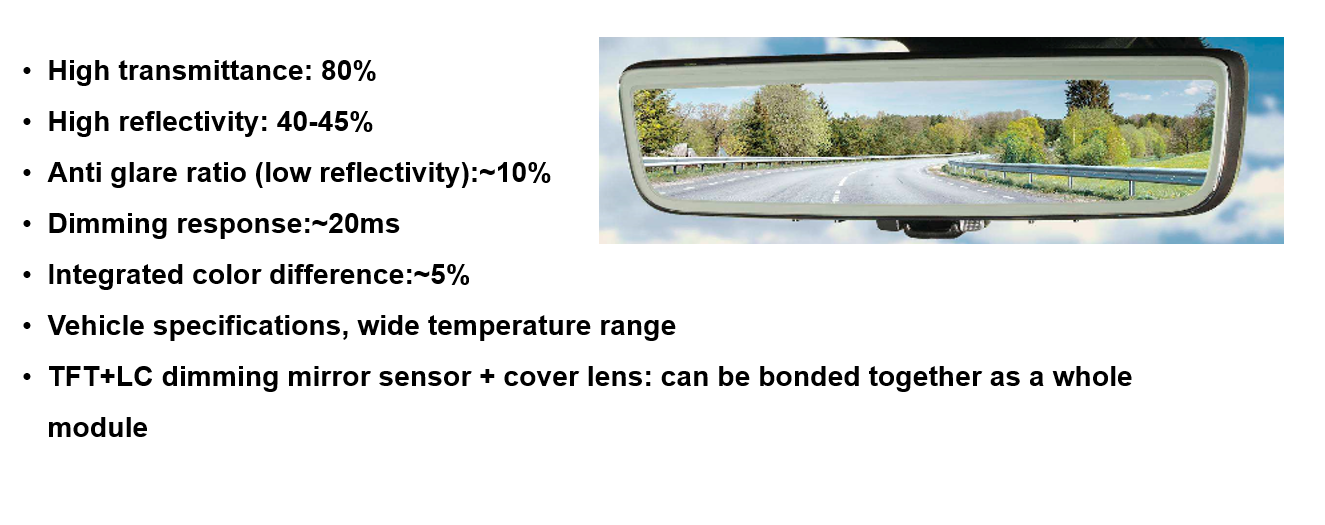
Every layer and material inside the mirror assembly contributes to achieving this balance.
Flat 2D vs. 2.5D Cover Lens Designs
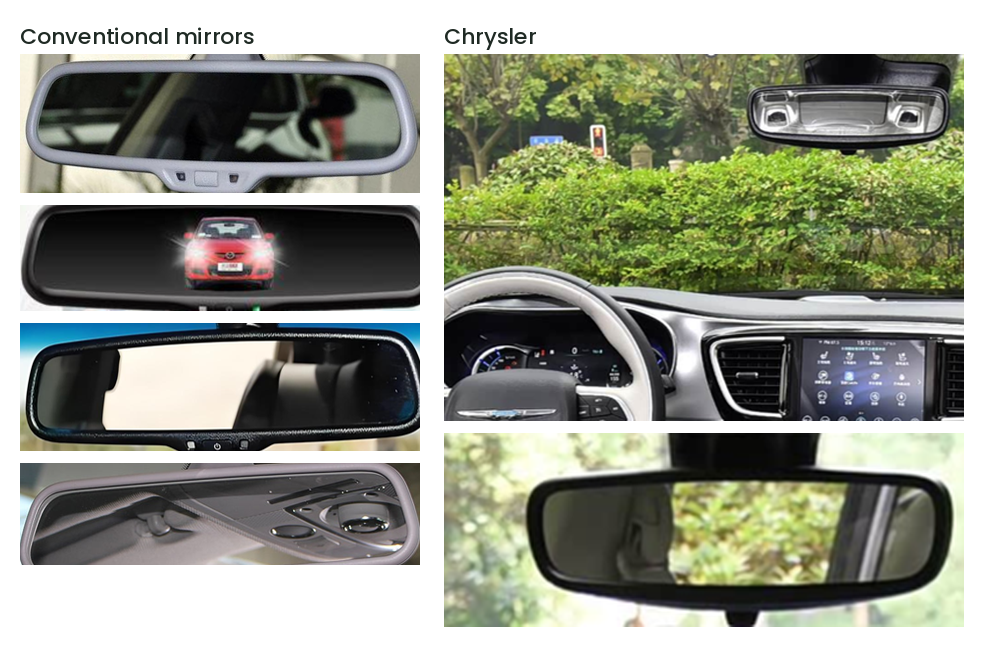
One of the earliest decisions in mirror design is the choice between a traditional flat cover lens and a 2.5D curved-edge cover lens. Conventional mirror designs utilize flat cover lenses combined with plastic housings due to their simplicity, lower manufacturing cost, and mature supply chain.
- FLAT 2D COVER WITH PLASTIC CASE
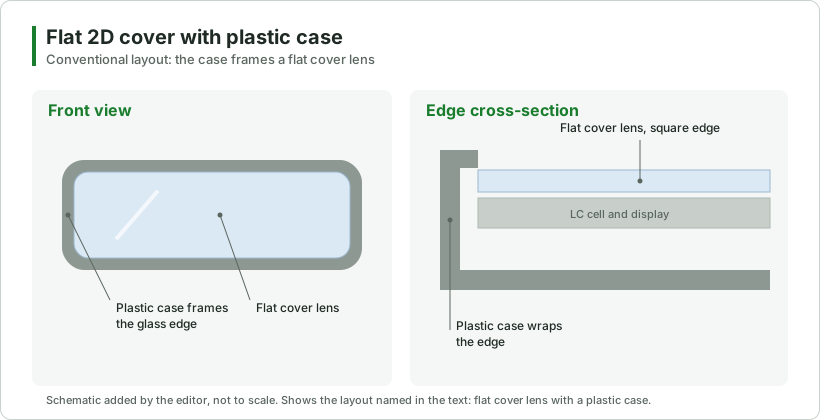
Advantages include:
- Lower tooling complexity
- Higher manufacturing yield
- Easier assembly process
- Better cost control
However, flat designs may appear less premium when compared to newer vehicle interior trends.
Premium OEM brands such as BMW and Audi have increasingly adopted 2.5D cover glass designs. The rounded edge profile provides a smoother and more integrated appearance that aligns with modern automotive interior aesthetics.
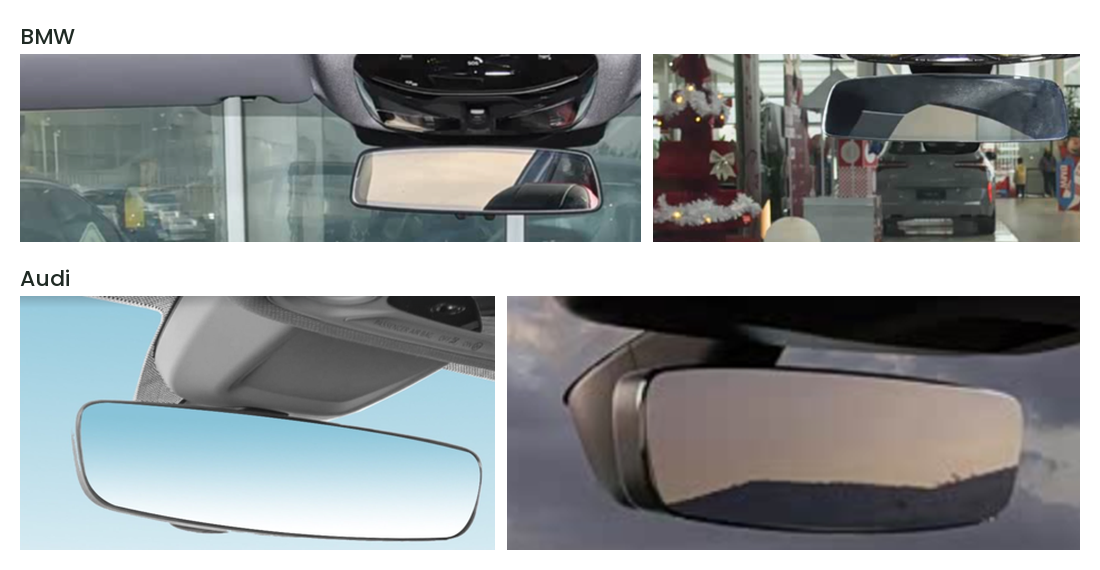
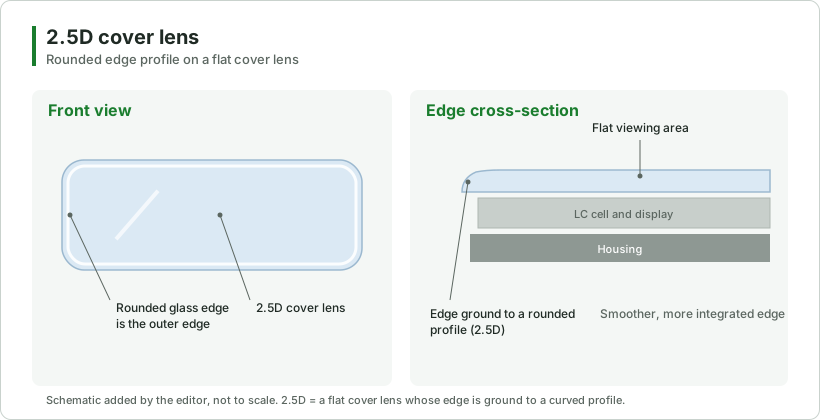
Benefits of 2.5D designs include:
- Premium visual appearance
- Improved perceived quality
- Better integration with modern cockpit design language
The trade-off is higher manufacturing complexity and increased component cost.
Anatomy of an LC Rearview Mirror
A typical LC mirror assembly consists of multiple optical layers working together to provide both mirror functionality and display visibility.
- 1.8t Cover Lens with 2.5D+Mirror silver silk print+0.7t ITO glass (*2)+3M RPM film
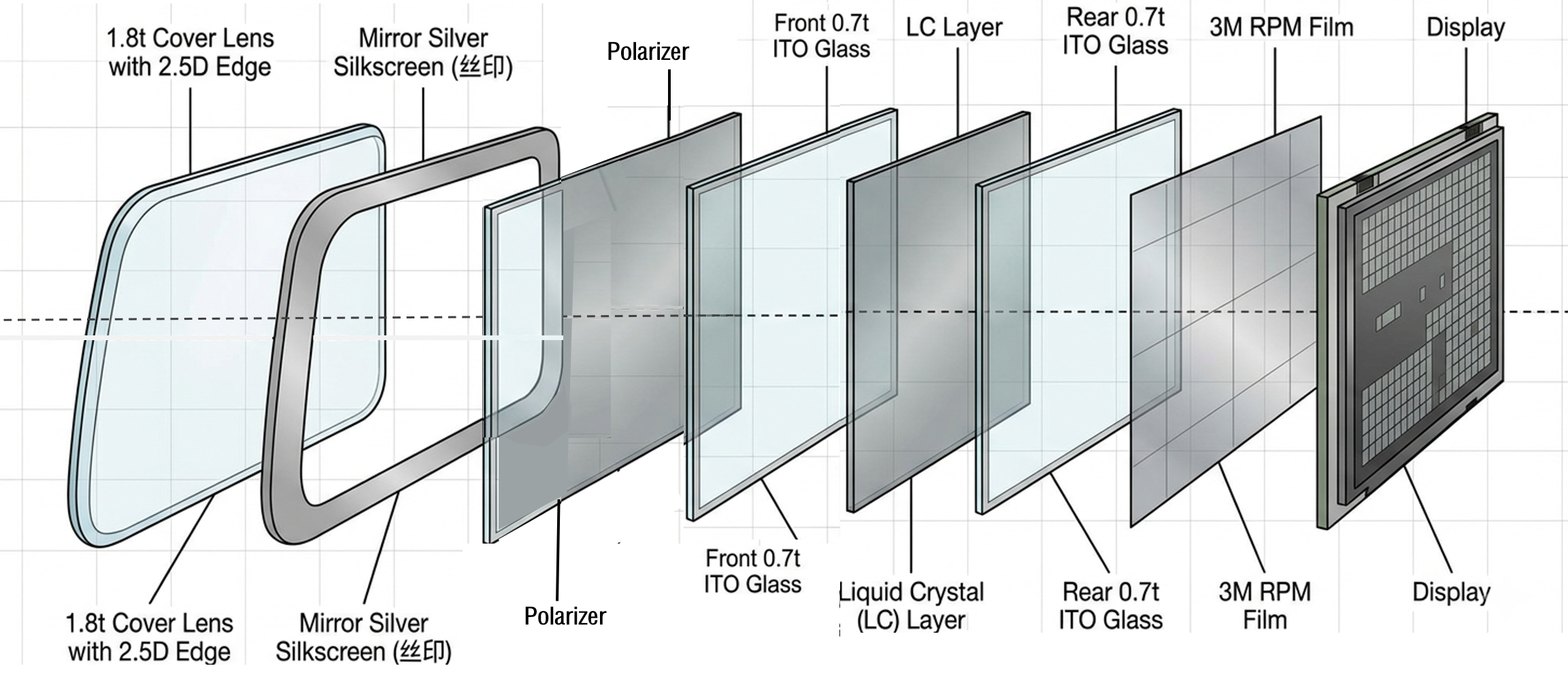
Each layer contributes specific optical characteristics that determine:
- Mirror reflectivity
- Display brightness
- Viewing angle
- Environmental durability
- Mechanical robustness
Cover Lens Surface Treatment Options
Surface treatment significantly influences both appearance and functionality.
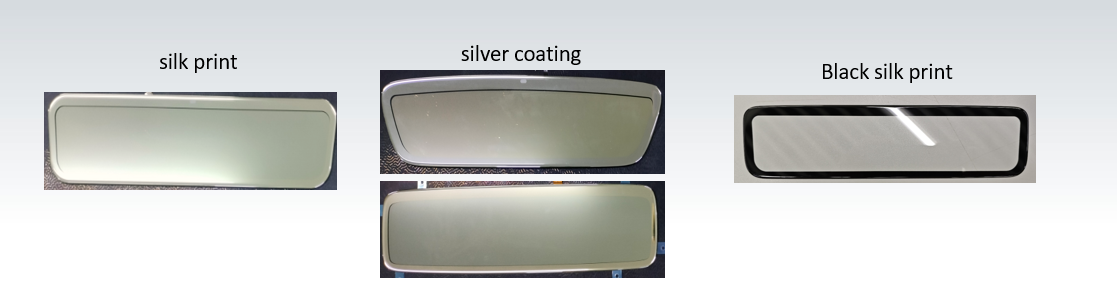
- Cover lens treatment:
Mirror silk print vs. Mirror silver coating vs. Black silk print
Mirror Silver Coating
- Provides the best mirror integration effect by creating a seamless mirror appearance in mirror mode
- Enhances appearance
- Slightly higher cost due to additional coating process
The Importance of ITO Glass Thickness
ITO (Indium Tin Oxide) glass is one of the most influential components affecting mirror weight, thickness, and cost.
A comparison using a 9.2-inch LC cell demonstrates the impact of glass thickness selection.
LC (ITO glass) thickness 0.7t vs. 0.5t vs. 0.25t

Benefits of Thinner ITO Glass
- Reduced overall mirror weight
- Slimmer mirror architecture
- Shorter optical distance
- Potential improvement in display integration
These benefits are especially attractive for OEMs pursuing lightweight vehicle design strategies.
Trade-off:
- 0.25T glass increases process difficulty and reduces yield, resulting in higher cost
Other Cost Reduction Option
- Flat Cover Lens vs. 2.5D
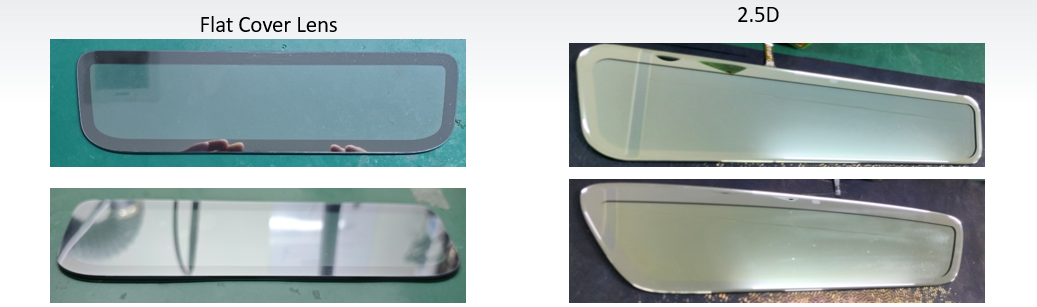
Flat cover lenses generally offer:
- Lower tooling costs
- Simpler processing
- Higher yields
Compared with 2.5D solutions, they remain an attractive option for cost-sensitive projects.
Common optimization options include:
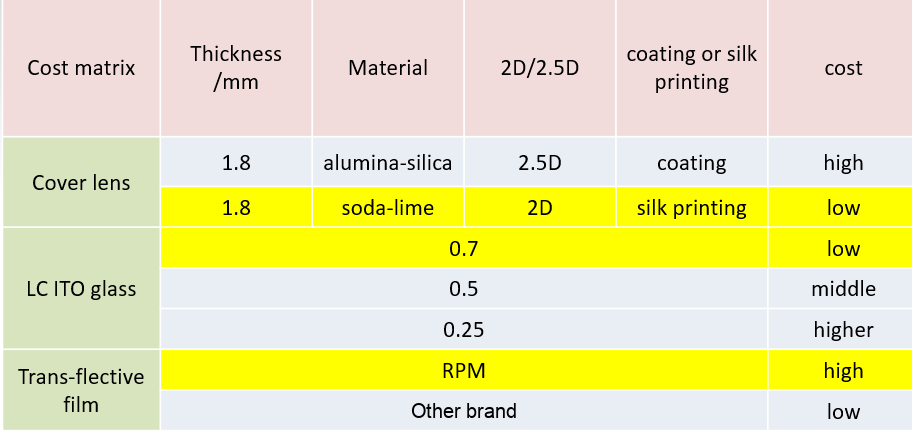
- Soda-lime glass instead of aluminosilicate glass
- Silk printing instead of mirror coating
- Alternative optical films instead of premium imported solutions
A cost-effective baseline configuration may include:
- 1.8 mm flat cover lens
- Silk printing treatment
- Standard LC ITO glass solution
- RPM optical film
This combination provides a strong balance between appearance, performance, and cost competitiveness.
Supporting Leading Automotive Tier-1 and OEM Customers
The rapid growth of smart cockpit technologies has increased demand for innovative mirror solutions worldwide.
Conclusion
The development of a smart LC rearview mirror requires much more than selecting the right display. Every design decision, from cover lens geometry and coating technology to ITO glass thickness and optical film selection, affects the final product’s performance, appearance, manufacturability, and cost.
Success ultimately lies in balancing these competing priorities while meeting the expectations of both OEM customers and end users. As automotive interiors become increasingly sophisticated, intelligent mirror solutions will continue to play a critical role in delivering safer, smarter, and more connected driving experiences.
What’s Next?
The transition toward intelligent, display-integrated rearview mirrors is accelerating. Whether optimizing optical distance with ultra-thin 0.25t glass or perfecting the seamless look of 2.5D silver coatings, the engineering challenges are as exciting as ever.
What design priorities are you seeing most requested in your cockpit programs—maximum weight reduction, seamless aesthetics, or aggressive cost optimization?
Frequently asked questions
What is the difference between a flat 2D and a 2.5D cover lens?
What layers make up a typical LC rearview mirror?
Why choose a mirror silver coating over silk printing?
What changes with thinner ITO glass?
What does a cost-effective LC mirror configuration look like?
New engineering articles by email.
Keep reading
Cover Glass and Surface Treatments
Display FundamentalsHow an LCD Is Made
Display FundamentalsReflective, Transmissive, and Transflective LCDs
Optics, Cover Glass & CoatingsAutomotive Rearview Mirror Reflectance Requirements: Why Reflectance Matters and How It Is Controlled
Optics, Cover Glass & CoatingsThe Complete Guide to Display Coatings: How AG, AF, and AR Solutions Solve Critical Display Problems
Touch PanelsSITO vs DITO Touch Panel Architecture
Working on a smart mirror or cockpit display?
Talk to an engineer about cover lens, ITO glass and film options for your program.