

Embedded TFT modules
Embedded TFT Modules
An embedded TFT module is a color TFT panel with an onboard controller (and often onboard flash for UI assets), so you drive it over a simple serial or parallel interface instead of timing the raw panel yourself. It lets a low-cost MCU run a full color interface without a dedicated display processor.
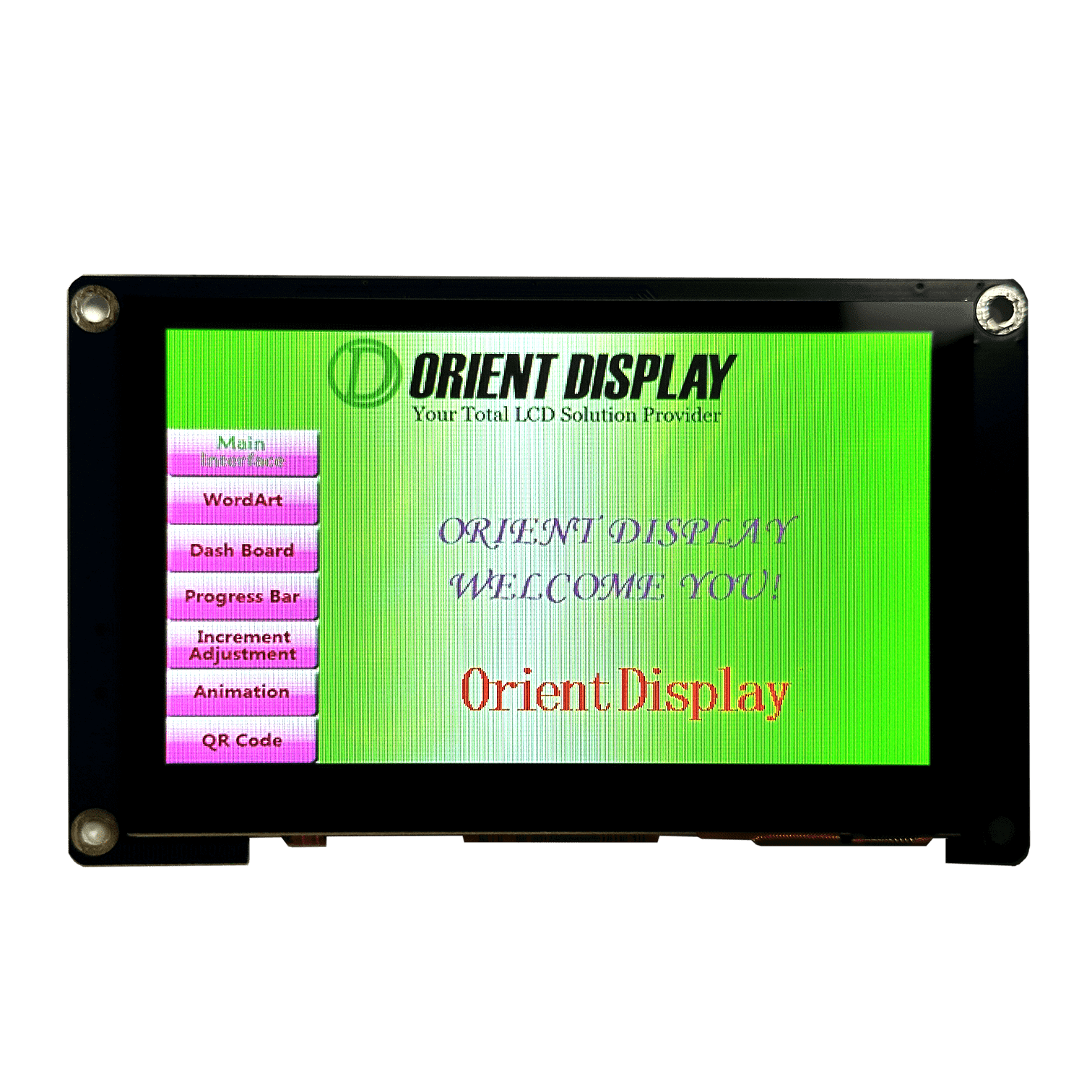
Embedded TFT module specifications
Standard ranges for the embedded module families, with sizes and resolutions extended for custom builds. For a specific size, interface, or onboard-flash option, start a custom project.
- Sizes: 0.96″ to 32″
- Resolutions: Any resolution
- Panel type: IPS and TN
- Brightness: 240 to 850 cd/m²
- Interfaces: parallel (8080 / 6800), UART / RS232, SPI, HDMI
- Touch: none, resistive, or capacitive
- Onboard flash: 4 to 128 Mbit; 65K or 16.7M colors
- Part families: ACN (parallel), AGU / AGN (UART), AFY P-series (SPI)
Where it fits
Typical applications: instrument panels, smart-home controls, appliances, and any MCU-hosted product that needs a full color graphical UI without a dedicated display processor.
How it differs from the other TFT families: an embedded module carries its own controller, so a low-cost MCU drives it over a serial or parallel interface. For the bare display timed by your own controller, see standard TFT panels; when direct-sun legibility is the requirement, see sunlight-readable TFT; for a non-rectangular outline, see round and bar TFT; when touch input is the driving requirement, see TFT with touch; and to bring a design up on an Arduino- or Raspberry Pi-ready board, see dev-board / maker TFT.
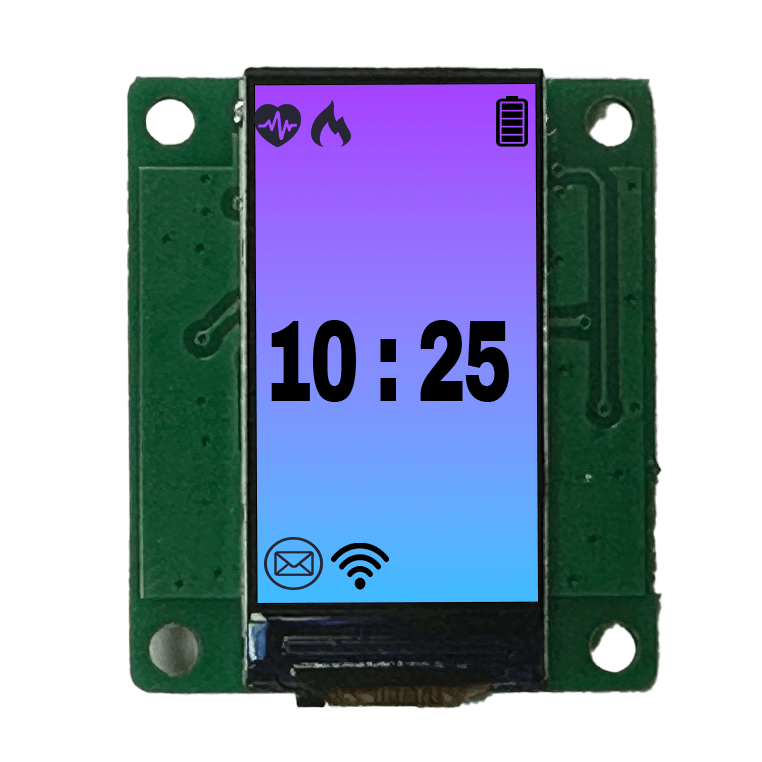
The family, small to large


Learn more before you buy
Background on embedded modules and how to interface one.
Embedded Display Modules Explained
What an onboard controller adds, and when a module beats driving a raw panel yourself.
Read the guideChoosing a Display Interface
Parallel, UART, SPI, and HDMI: which interface fits your controller and update rate.
Read the guideWhat Is a TFT Display
How an active-matrix TFT panel is built and driven, under the onboard controller.
Read the guideDisplay Connector and Pinout Basics
Reading a module's connector, pin functions, and what to match on your carrier board.
Read the guideReady to spec an embedded TFT module?
Tell us the size, interface, and UI requirements. The more detail on your MCU and how much of the interface should live onboard, the faster we can match a module or quote a custom build.