

Dev-Board / Maker TFT
Dev-Board / Maker TFT
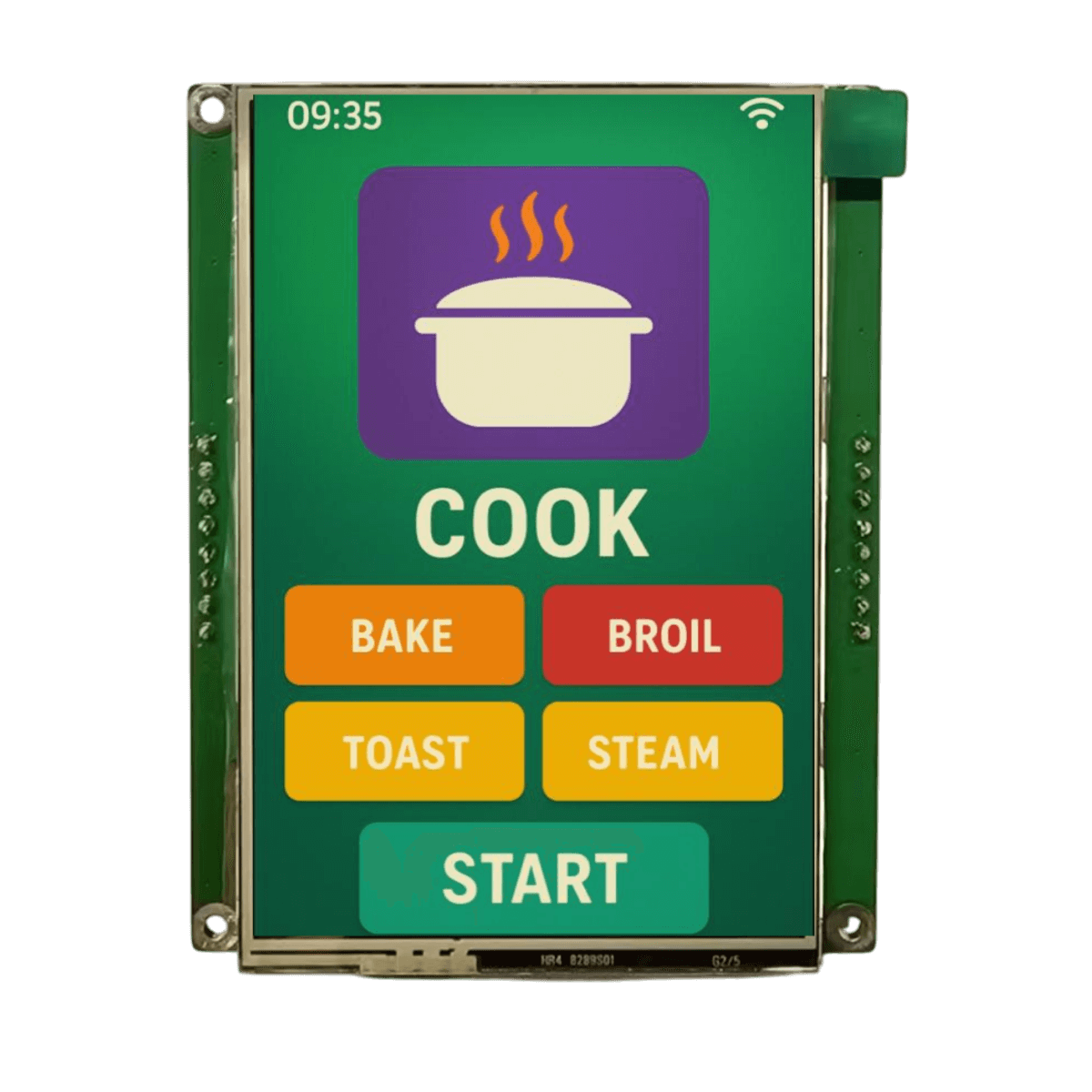
Dev-board / maker TFTs are Arduino- and Raspberry Pi-ready displays, wired and driver-supported for prototyping, hobby projects, and evaluation, so you can bring a screen up without designing a custom carrier board first.
Dev-board / maker TFT specifications
Standard ranges for the Arduino and Raspberry Pi series. For a specific board, interface, or driver, talk to an engineer.
- Arduino series: 0.96″ to 3.2″, 160×80 to 240×320
- Arduino interface: 4-wire SPI, 300 cd/m², IPS and TN
- Arduino driver ICs: ST7735S, ST7789V, ILI9341V, ILI9342C
- Part families: AFL (Arduino), AFK / AFY (Raspberry Pi), JAZZ (demo / eval)
- Raspberry Pi series: 4.3″ to 10.1″, 800×480 to 1280×800
- RPi interface: HDMI + USB (VGA on 5.0″ / 10.1″), 680–900 cd/m²
- RPi touch: resistive or capacitive
- Compatibility: demo / eval boards are distributed by OD and work with OD panels
Where it fits
Typical applications: prototyping and proof-of-concept, education and maker projects, and pre-production evaluation of an OD panel before committing to a production part.
How it differs from the other TFT families: a dev board is wired and driver-supported so a screen comes up on an Arduino or Raspberry Pi without a custom carrier. For the production panel behind a prototype, see standard TFT panels; when direct-sun legibility is the requirement, see sunlight-readable TFT; for an onboard controller and a simple serial interface, see embedded TFT modules; for a non-rectangular outline, see round and bar TFT; and when touch input is the driving requirement, see TFT with touch.
The family, small to large


Learn more before you buy
Background on driving a display from a dev board.
Embedded Display Modules Explained
How a driver-supported board brings a panel up without a custom controller design.
Read the guideChoosing a Display Interface
SPI on Arduino, HDMI on Raspberry Pi: matching the interface to your host board.
Read the guideWhat Is a TFT Display
How an active-matrix TFT panel is built and driven, on the bench or in production.
Read the guideDisplay Interface Quick Reference
A one-page lookup for the interfaces and driver ICs a dev board exposes.
Read the guideReady to bring up a display on your board?
Tell us the host board and the panel you want to prototype. We can point you at the right dev board and driver, and at the production part it maps to when you are ready to move on.