

TFT with touch
TFT with Touch
A TFT-with-touch panel integrates a touch sensor onto the display: four-wire resistive (RTP) for low cost, glove, and stylus use, or projected-capacitive (CTP / P-CAP) for multi-touch behind a glass front. It is the entry point when touch input is the requirement, and where the display and touch layer are supplied and QC’d together rather than sourced separately and bonded downstream.
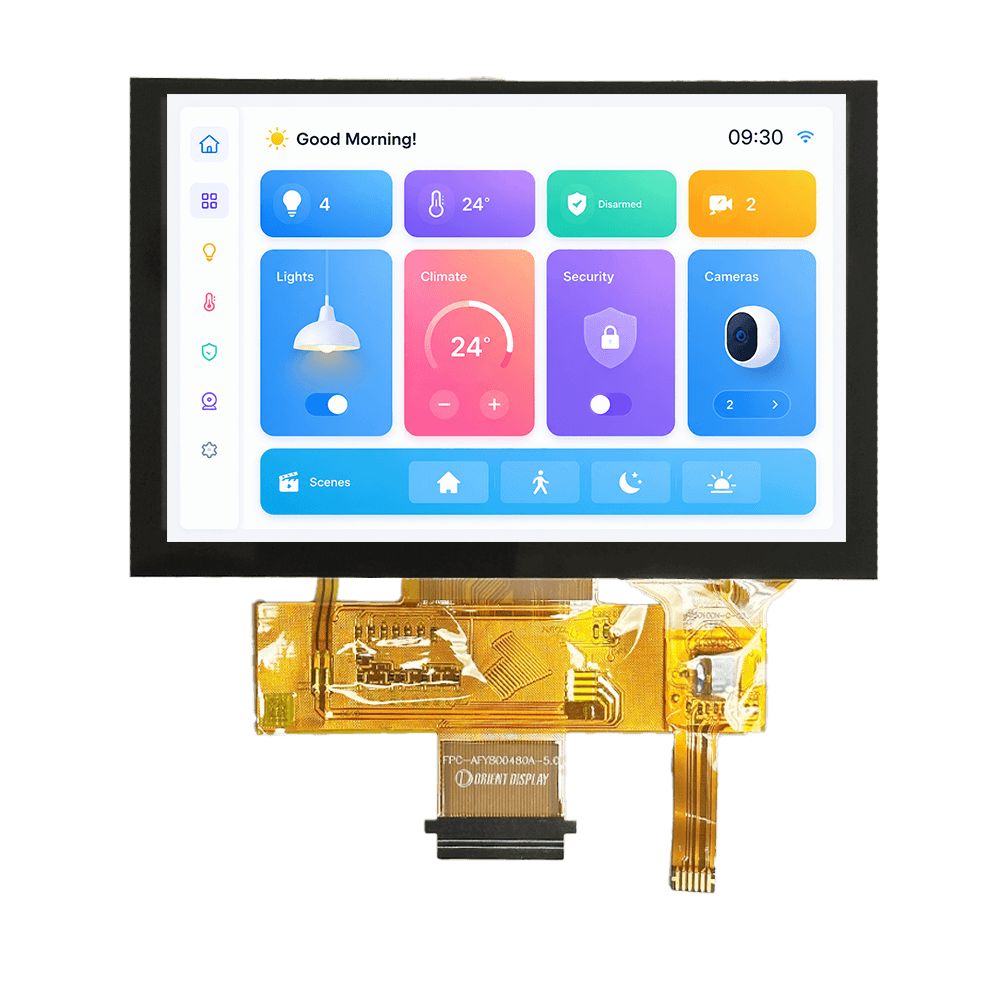
TFT-with-touch specifications
Standard ranges for integrated-touch panels and standalone sensors. For a specific size, touch type, or controller, start a custom project.
- Integrated TFT + touch: 2.4″ to 10.1″
- Standalone capacitive sensors: 7.0″ to 21.5″
- Touch types: 4-wire resistive (RTP) and projected-capacitive (P-CAP)
- Aspect: 4:3, 16:9, 16:10
- Capacitive controllers: GT911, ST1633 / ST1633i, MXT336T, EXC series, ILI2302M, SIS9276B
- Sensor interfaces: I²C or USB
- Brightness: follows the base panel (300–550 indoor; 800–1000 sunlight)
- Part families: AFY
Where it fits
Typical applications: HMIs, industrial control panels, automotive interfaces, medical instruments, and kiosks — anywhere touch input is the primary way the product is operated.
How it differs from the other TFT families: the touch sensor is integrated onto the display and QC’d with it, rather than sourced separately and bonded downstream. For the bare display without touch, see standard TFT panels; when direct-sun legibility is the requirement, see sunlight-readable TFT; for an onboard controller and a simple serial interface, see embedded TFT modules; for a non-rectangular outline, see round and bar TFT; and to prototype on an Arduino- or Raspberry Pi-ready board, see dev-board / maker TFT.
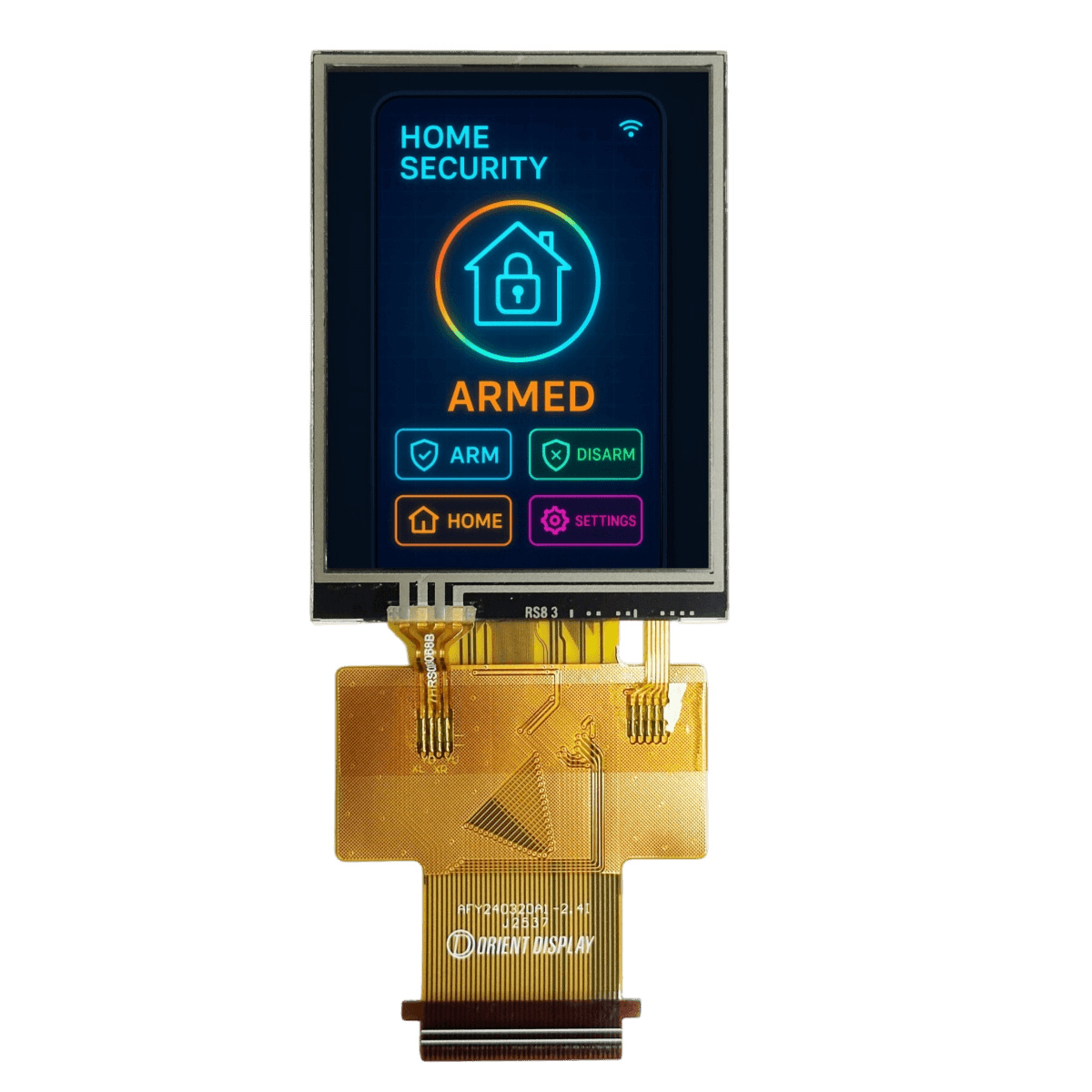
The family, small to large


Learn more before you buy
Background on touch options and how they bond to the display.
Resistive vs Capacitive Touch
Which touch technology fits your environment, input method, and cost target.
Read the guideWhat Is a TFT Display
How an active-matrix TFT panel is built and driven, under the touch layer.
Read the guideCover Glass and Surface Treatments
The glass front over a capacitive sensor, and what surface treatment does to it.
Read the guideOptical Bonding Explained
Bonding the touch and cover-glass stack to cut reflections and boost contrast.
Read the guideReady to spec a TFT with touch?
Tell us the size, the touch type, and how the panel will be operated — gloves, stylus, or bare finger — and we can match an integrated part or quote a custom touch build.