

Sunlight-Readable TFT
Sunlight-Readable TFT
A sunlight-readable TFT stays legible in direct sun, where an ordinary panel washes out. Orient Display reaches that with four techniques, used alone or together: a high-brightness backlight to outshine the ambient light, transflective construction that also reflects some ambient light back through the panel, optical bonding that removes the air gap behind the cover glass to cut internal reflections, and anti-reflective or anti-glare surface treatments.
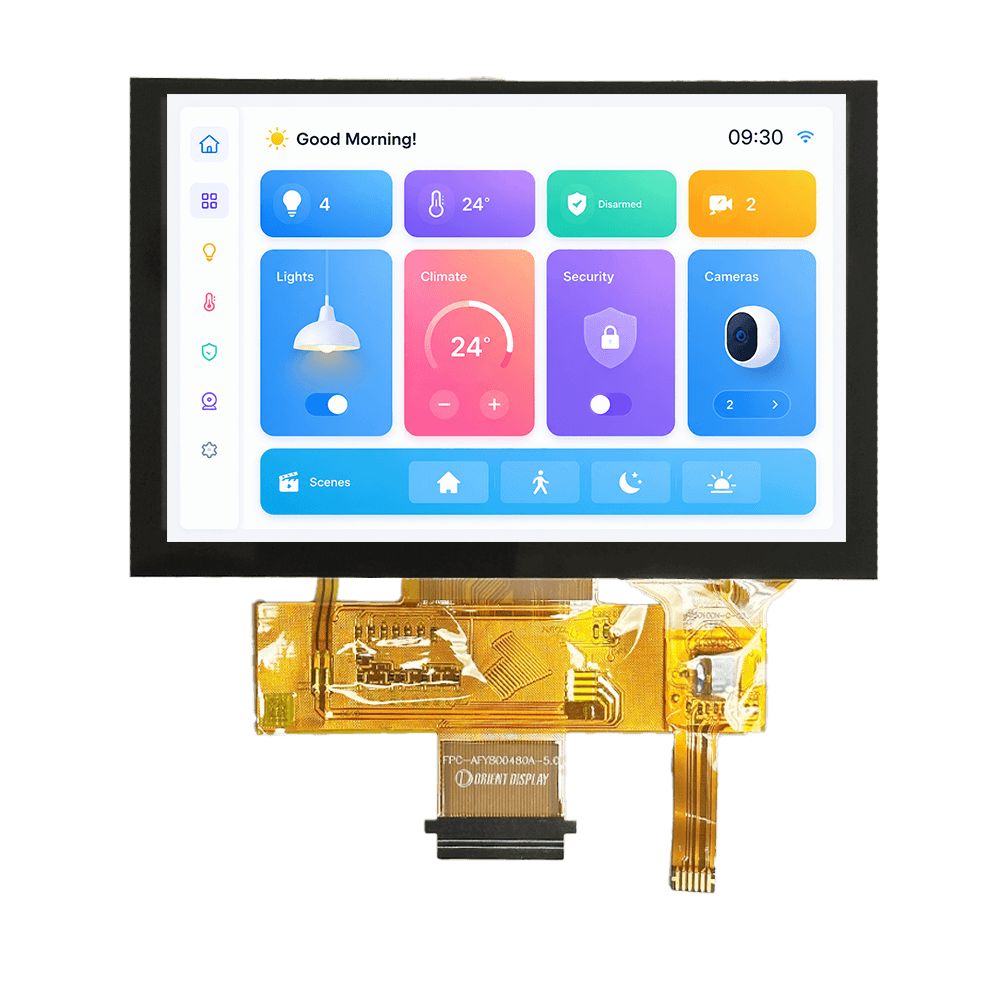
Sunlight-readable TFT specifications
Standard ranges for the AFY sunlight-readable family. For a specific size, brightness, or bonding option, start a custom project.
- Brightness: 800 to 1000 cd/m² standard; higher available on custom builds
- Panel type: IPS, for wide viewing angle and stable color
- Display mode: normal black, transmissive, anti-glare
- Sizes: 2.4″ to 5.0″ standard, larger on custom
- Resolutions: 240×320 up to 800×480
- Interfaces: RGB (18/24-bit), MCU, SPI; LVDS on larger panels
- Touch: none, resistive, or capacitive
- Part family: AFY
Where it fits
Typical applications: outdoor and high-ambient equipment — kiosks, EV charging, transportation, and industrial, marine, and agricultural instruments.
How it differs from the other TFT families: where standard TFT panels cover indoor use at 250–600 cd/m², sunlight-readable panels are built for bright ambient light. They share the same interfaces and touch options; the difference is the high-brightness / transflective / anti-glare construction and IPS as standard. For an onboard controller and a simple serial interface instead of a bare panel, see embedded TFT modules; for a non-rectangular outline, see round and bar TFT; for touch as the driving requirement rather than an add-on, see TFT with touch; and to prove out a design on an Arduino- or Raspberry Pi-ready board before committing to a sunlight-readable production part, see dev-board / maker TFT.
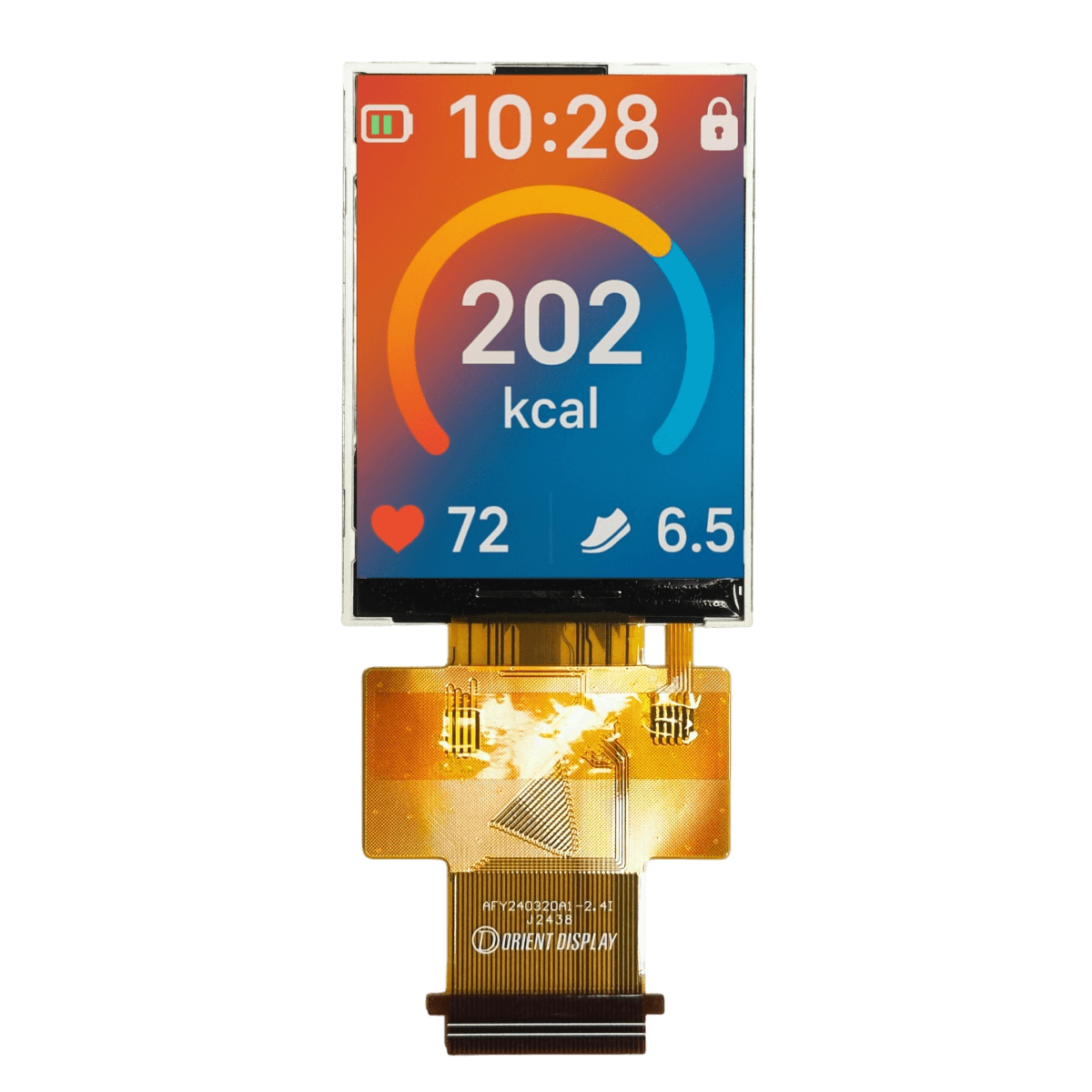
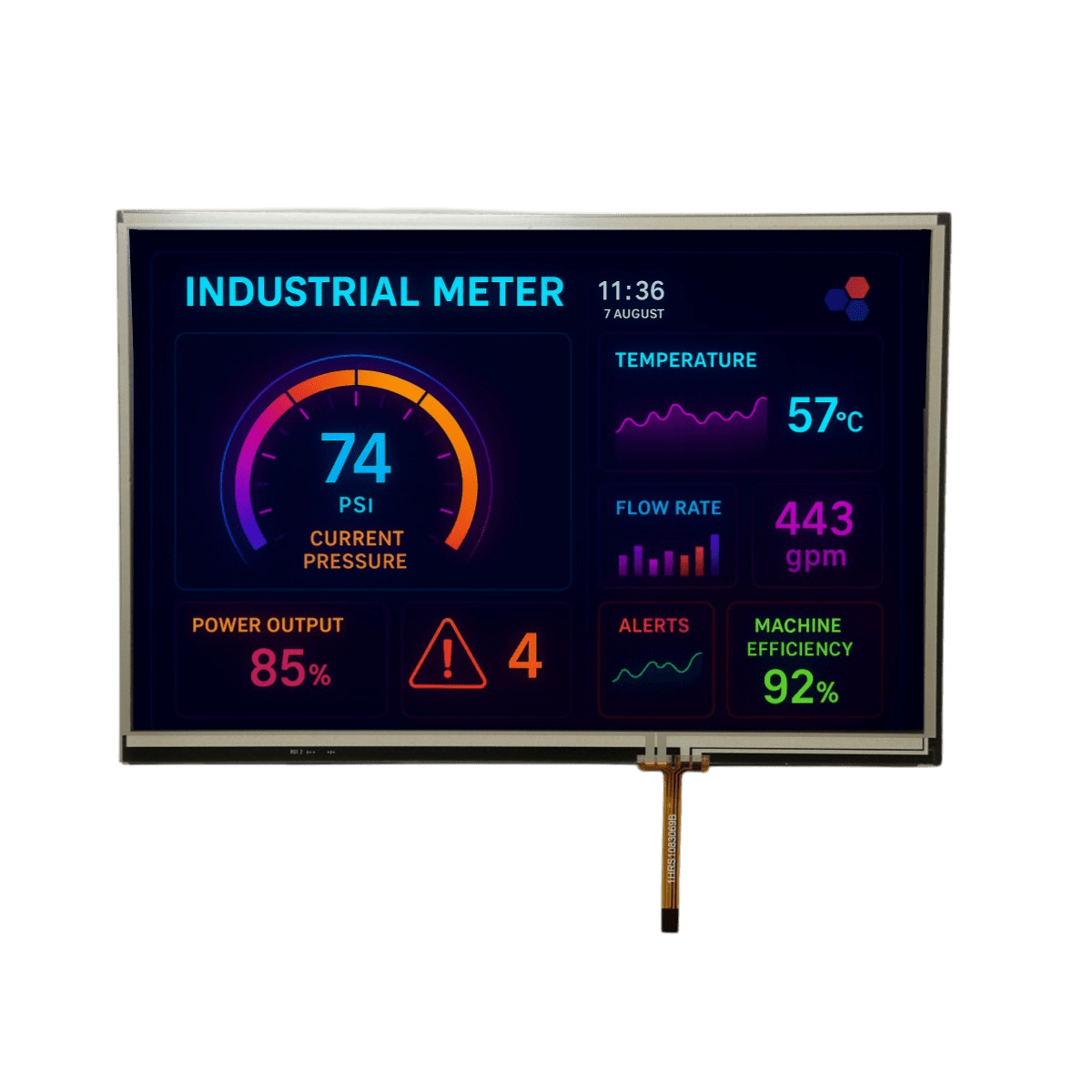
The family, small to large

Learn more before you buy
Background on how sunlight readability is built and specified.
Specifying Brightness and Sunlight Readability
How to set a brightness and contrast target for the ambient light your panel will sit in.
Read the guideReflective, Transmissive, and Transflective
The construction difference that lets a panel use ambient light instead of fighting it.
Read the guideOptical Bonding Explained
Removing the air gap behind the cover glass to cut internal reflections and boost contrast.
Read the guideCover Glass and Surface Treatments
Anti-reflective and anti-glare treatments and what each does to outdoor legibility.
Read the guideReady to move on a sunlight-readable TFT build?
Tell us the lighting conditions and viewing angle the panel needs to survive — the more detail on where and how it will be viewed, the faster we can match or build a construction.