

Introduction of Reflective TFT
On this page
When it comes to low-power display technologies, reflective TFT displays are becoming an increasingly popular choice. In fact, many customers who see them for the first time often compare them to e-paper—and for good reason.
Both technologies share several attractive benefits: low power consumption, excellent sunlight readability, eye comfort, and a paper-like viewing experience. But despite these similarities, reflective TFT offers some important advantages that set it apart.
Reflective TFT vs. E-Paper: What’s the Difference?
Wider Operating Temperature Range
Most e-paper displays are designed to operate within a temperature range of 0°C to 50°C. Reflective TFT, on the other hand, can typically function in a much wider range—from -20°C to 80°C.
This makes reflective TFT a better option for outdoor or industrial environments where temperature conditions can vary significantly.
Faster Refresh Rate
One of the key limitations of e-paper is its slow refresh speed. While it works well for static content, it struggles with dynamic tasks like:
- Scrolling webpages
- Opening new tabs
- Displaying animations
Reflective TFT displays don’t have this limitation. Their faster response time makes them much more suitable for applications that require smooth, real-time interaction.
Better Color Performance
E-paper displays are typically limited in color capability:
- Most are black and white
- Some support up to 3 colors
Reflective TFT displays offer far more flexibility:
- Black & white
- 4 or 8 colors
- Full color (up to 16.7 million colors)
This makes reflective TFT a strong candidate for applications where visual richness matters.
Compared to Traditional TFT (IPS/TN)
Unlike standard IPS or TN TFT displays, reflective TFT does not require a backlight under normal conditions. This brings several benefits:
- Thinner display structure
- Lower power consumption
- Excellent visibility in bright sunlight
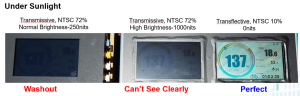
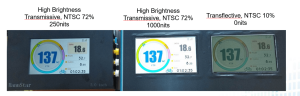
While IPS displays may require high brightness levels (e.g., 1000 nits) to remain readable outdoors, reflective TFT uses ambient light instead—making it naturally sunlight-readable.
At the same time, it remains eye-friendly for indoor use, providing a comfortable viewing experience similar to paper.
Power Consumption: What to Expect
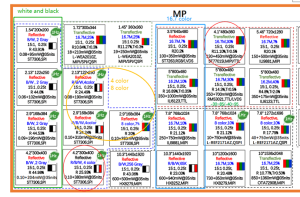
The power consumption of reflective TFT varies depending on screen size and color depth. Here are some typical examples:
- Black & White (1.54”–4.2”)
~0.08 to 0.10 mW - 4 / 8 Color Displays
~0.10 mW (2”) up to ~40 mW (8”) - Full Color (16.7M colors, ~5”)
~350 mW
At higher brightness levels (e.g., when using a backlight at ~35 nits), power consumption can approach that of IPS TFT (~1000 mW). However, a key advantage is that reflective TFT does not require the backlight to be constantly on, helping reduce overall energy usage in real-world applications.
Final Thoughts
Reflective TFT displays bridge the gap between traditional TFT and e-paper technologies. They combine:
- The low power and readability of e-paper
- The speed and color performance of TFT
This unique balance makes them an excellent choice for a wide range of applications—from portable devices to outdoor equipment.
If you’re looking for a display that delivers both performance and efficiency, reflective TFT is definitely worth considering.
If you have any questions, please contact our engineering.
Need a display built to your own spec? Start a custom project and our engineers respond within one business day.
Start a Custom ProjectHave a display project in mind?
Talk to an engineer about the display your application needs.