
Novel Custom Color Display Designs
How dead-front designs deliver custom-looking color displays without the NRE cost of a fully custom TFT or OLED panel.
On this page
Designers often envision color displays that can be made in any shape or size to match their product aesthetics perfectly. In reality, display designs are typically constrained by standard TFT or OLED panel sizes.
Customizing a TFT or OLED display can be prohibitively expensive because of high non-recurring engineering (NRE) costs. For example, developing a custom display on a Gen 5 TFT production line can require an investment of approximately $300,000 to $400,000. Development cycles are also long, so this route is generally feasible only for high-volume projects.
To address these challenges, the engineering team at Orient Display has explored innovative approaches that enable more flexible and visually appealing display designs. These concepts have proven highly useful for designers who want customization without the cost of a fully custom panel. Most of them are based on dead-front (all-black) display designs, which offer both aesthetic and functional advantages.
Key takeaways
- Fully custom TFT or OLED panels carry high NRE costs and long development cycles.
- Dead-front displays hide all icons and graphics until the backlight turns on.
- Fixed-position color designs range from up to three screen-printed colors to unlimited or gradient color films.
- Hybrid designs combine fixed-position color elements with TFT or AMOLED displays.
What Is a Dead-Front Display?
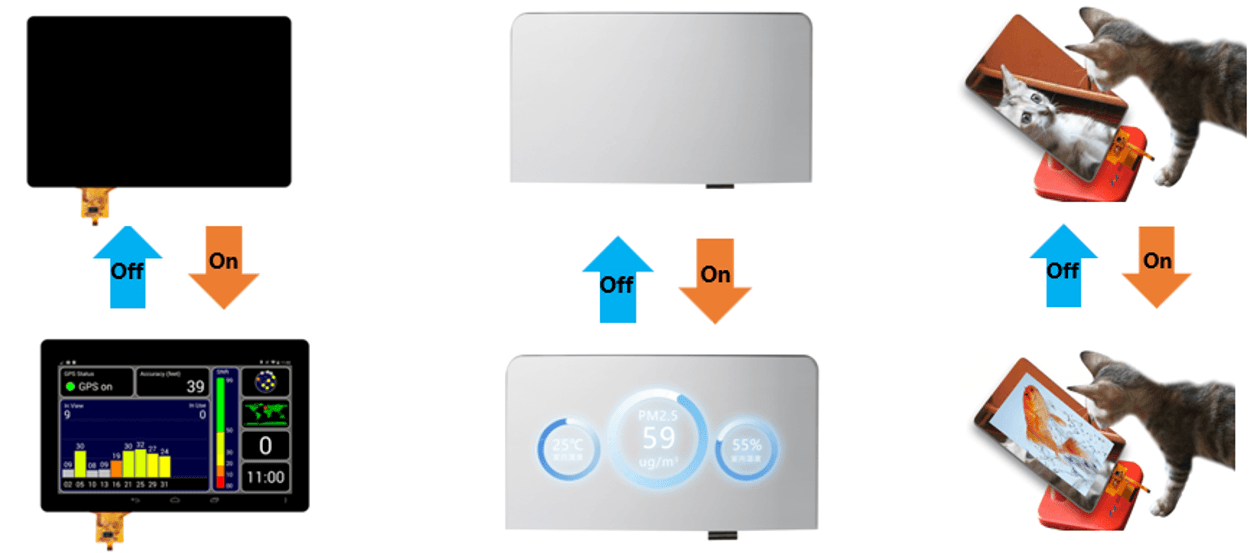
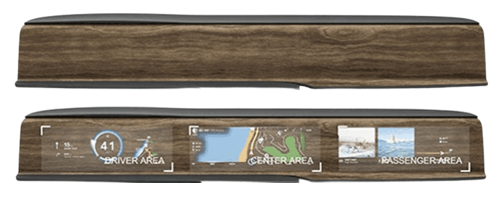
A dead-front display is a user interface panel that appears completely uniform when turned off: black, matte black, white, silver, mirror-like, or even wood-textured. In this state, all icons, text, and graphics are fully hidden, creating a seamless, minimalist surface.
When the display is illuminated by a backlight, the hidden elements become visible. The result is a clean, high-end, modern look, which makes dead-front displays especially popular in automotive dashboards, smart home appliances, and control panels.
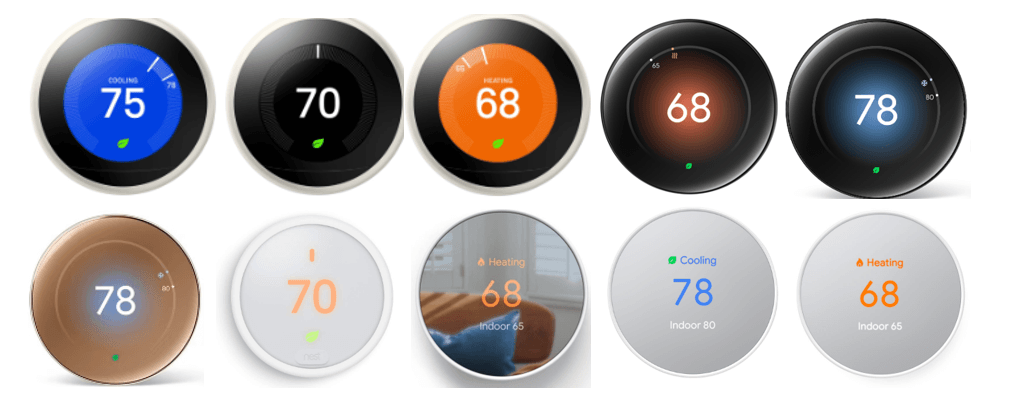
If in-house visual assets are limited, the Google Nest design team provides excellent examples of well-integrated display aesthetics, as shown below.
Three Black Dead-Front Design Approaches
The following design approaches explore black dead-front display concepts further.
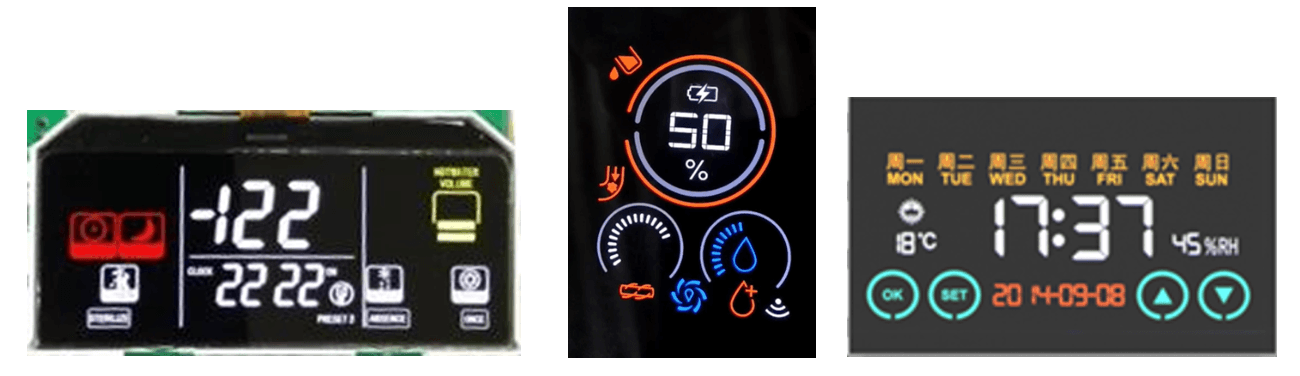
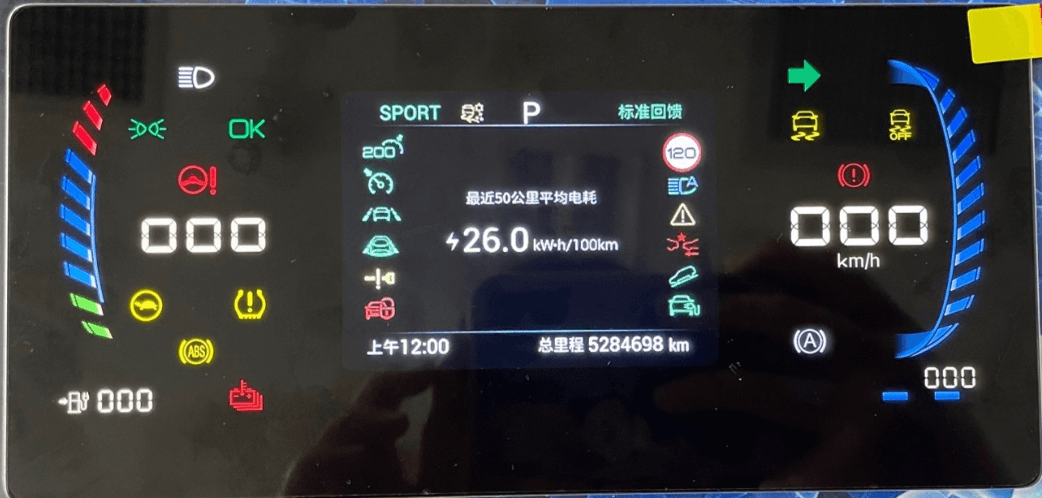
Design 1: Limited Colors with Fixed-Position Color Displays
For products that require simplicity, clarity, and cost efficiency, this approach delivers elegant results.
By using screen printing to define up to three colors in fixed positions, designers can create clean, intuitive interfaces with strong visual contrast. When the display is off, the surface remains perfectly uniform; when it is illuminated, only the intended elements appear, crisp and refined.
Why it works:
- Cost-effective for mass production
- High reliability and stable color performance
- Ideal for appliances, industrial controls, and minimalist UI designs
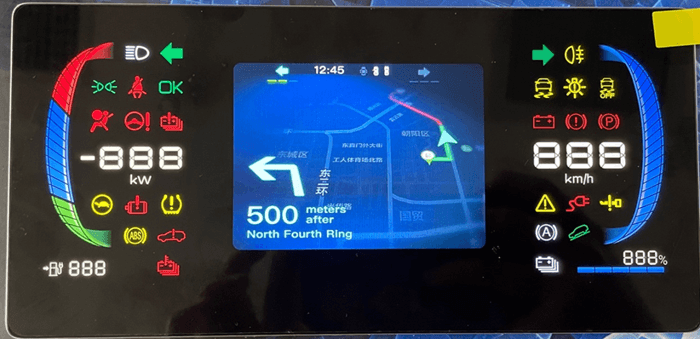
Design 2: Unlimited or Gradient Colors with Fixed-Position Color Displays
When your product demands richer visuals or a more premium feel, this approach removes the limitations of traditional color printing.
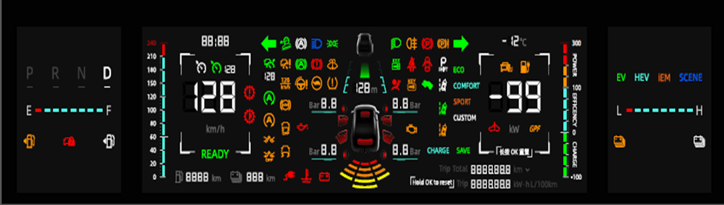
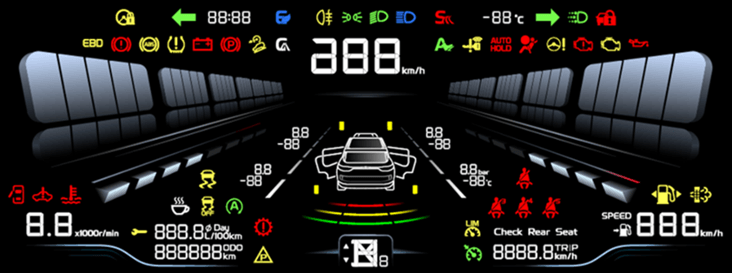
Instead of relying on screen printing, color films laminated onto the polarizer enable vibrant multi-color or gradient effects with superior consistency. Designers can create visually striking interfaces that stand out in competitive markets.
For optimal visual quality, we recommend at least 2 mm spacing between color segments to prevent crosstalk.
Why it stands out:
- Enables unlimited or gradient color designs
- Delivers a more premium, high-end appearance
- Ideal for smart home devices, consumer electronics, and branded UI experiences
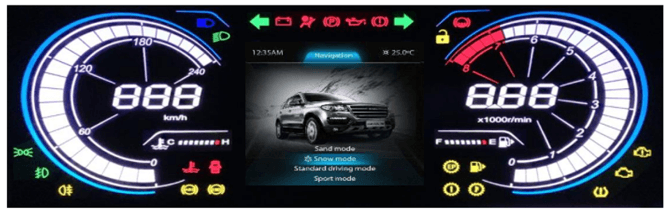
Design 3: Hybrid Fixed-Position Color Displays with TFT or AMOLED
For the most advanced applications, hybrid designs combine the best of both worlds: static elegance and dynamic intelligence.
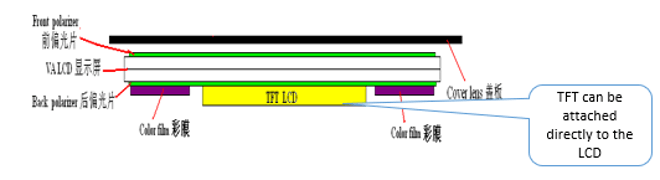
By integrating fixed-position color elements with TFT or AMOLED displays, designers can create interfaces that are both visually distinctive and functionally powerful.
Static icons, branding elements, or color zones remain crisp and consistent, while dynamic display areas provide rich content, animation, and interactivity.
What this unlocks:
- Premium, futuristic product designs
- Seamless integration of static and dynamic UI elements
- Maximum design freedom without full custom panel costs
From Concept to Reality
Great product design is no longer limited by standard display formats. With the right approach, you can achieve custom-looking designs without custom-level cost and risk.
At Orient Display, our engineering team works closely with customers to turn design concepts into manufacturable, high-performance display solutions.
Let’s build something distinctive together.
If you have questions or would like to explore your next design, please contact our engineering team.
Need a display built to your own spec? Start a custom project and our engineers respond within one business day.
Start a Custom ProjectHave a custom display design in mind?
Talk to an engineer about turning your design concept into a manufacturable display.