

Resistive touch
Resistive touch
A resistive touch panel registers a press: a flexible polyester top sheet and a glass base, each with a conductive coating, meet under finger, glove, or stylus pressure to close the circuit and report the point of contact. It is the low-cost, rugged choice, and the one that keeps working wet, oily, or gloved where projected-capacitive struggles.
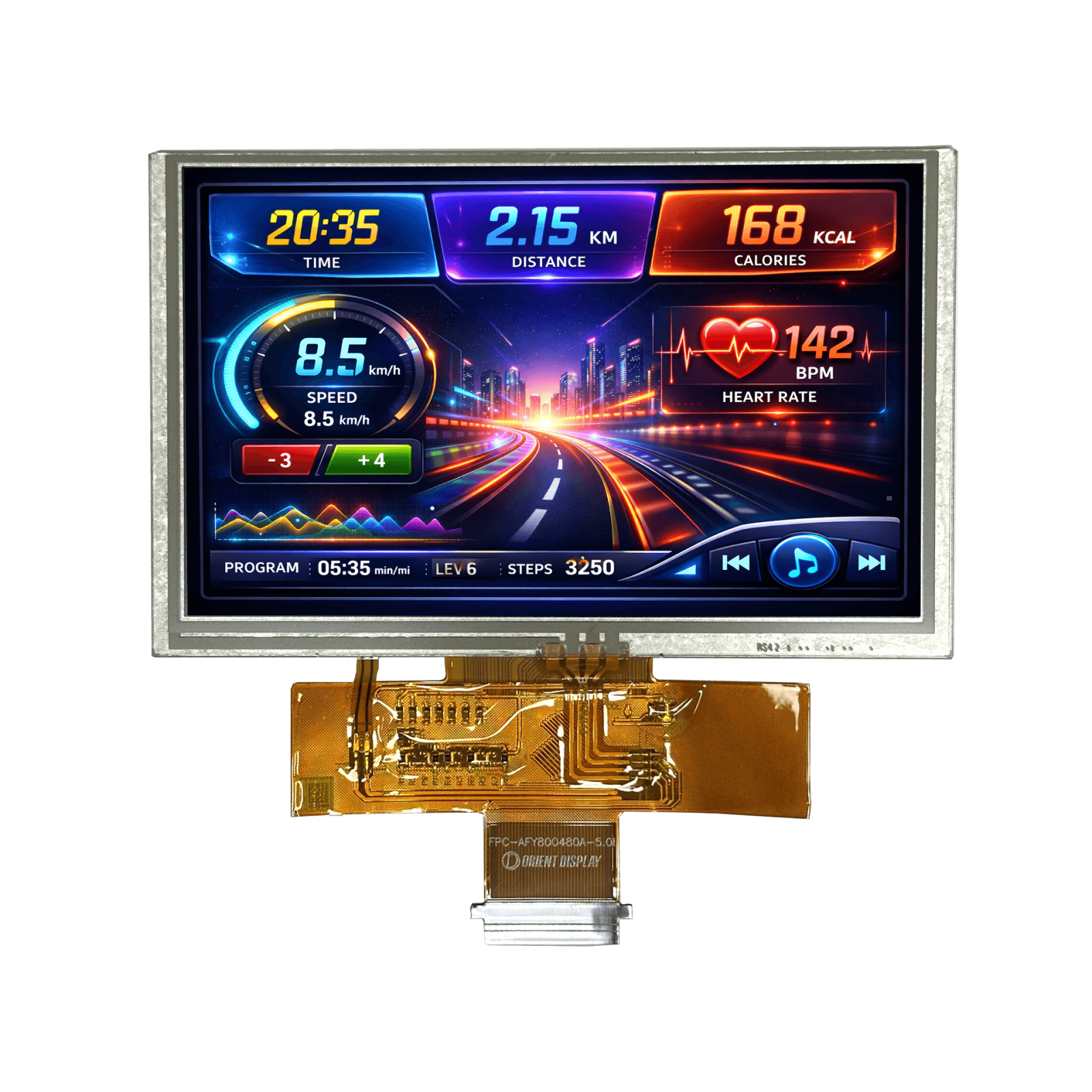
Resistive touch panel specifications
Standard ranges for resistive panels supplied bare or integrated onto an Orient Display LCD. For a custom wire count or size, start a custom project.
- Sizes: 1.44″, 1.77″, 2.0″, 2.2″, 2.4″, 2.8″, 3.0″, 3.5″, 4.3″, 5.0″, 7.0″, 8.0″, 10.1″, 12.0″, 14″, 15.6″
- Touch type: 4-wire standard; custom 5-wire or 8-wire on request
- Construction: glass layer with a conductive coating + polyester top sheet with a conductive coating; connection is typically FPC
- Input: finger, glove, stylus, or any pointing device
- Integration: supplied as a standalone panel or integrated onto an Orient Display LCD
- Strengths: low-cost design and manufacturing, low power, and liquid-resistant (water, salt water, oil, solvent) for rugged environments
- Part families: AFY (integrated IPS TFT + RTP), AFK (TFT + RTP, high-brightness and Arduino)
Where it fits
Typical applications: industrial and instrument controls, medical devices, rugged handhelds, and any glove- or stylus-driven interface.
How it differs: resistive is the pressure-based, single-touch, lowest-cost option — it works gloved and wet, but has lower optical clarity and no native multi-touch. Choose capacitive (PCAP) touch panels for multi-touch and a glass front; choose TFT with touch (TFT pillar) when you want the display and touch as one integrated part.
Integrated display + resistive-touch modules
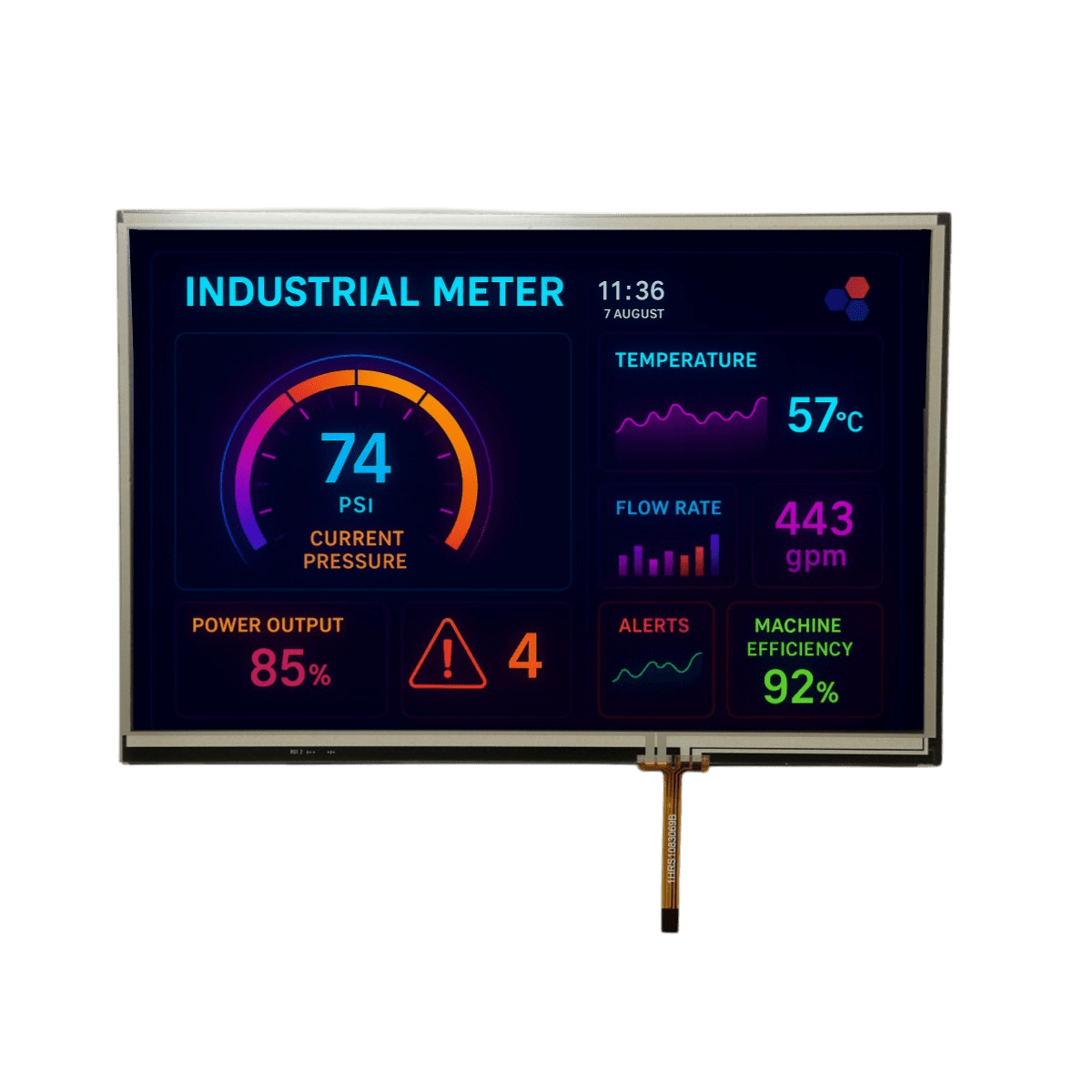
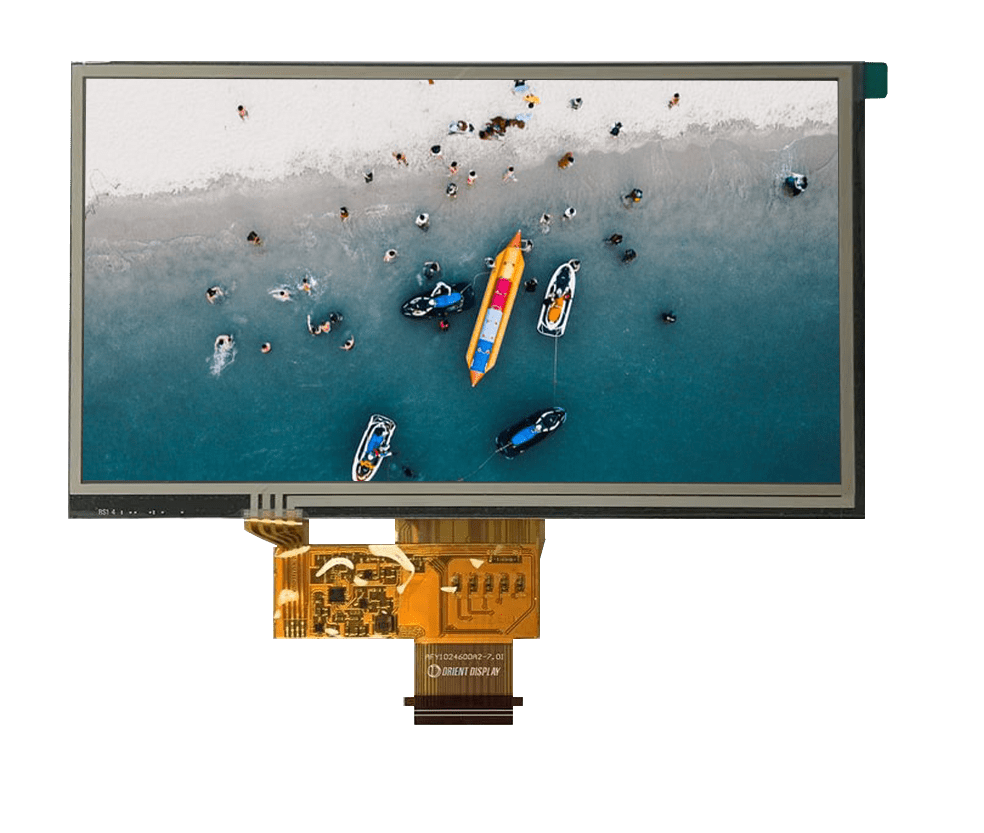

The store lists resistive touch as part of the AFY and AFK integrated display modules; the images above are complete display-plus-touch modules, not bare resistive panels.
Learn more before you buy
Background on resistive touch and how it compares to capacitive.
Resistive vs Capacitive Touch
How each technology works and when resistive is the better fit.
Read the guideCover Glass and Surface Treatments
Front-surface materials and treatments for a rugged touch interface.
Read the guideOptical Bonding Explained
Air gap vs bonded and what bonding does for readability and durability.
Read the guideChoosing a Display Interface
Matching an integrated display module's interface to your host.
Read the guideReady to spec a resistive touch panel?
Tell us the size, wire count, and whether you need a bare panel or an integrated display module — the more detail on your environment and host, the faster we can match or quote a build.