

Vertical Alignment LCD (VTN / PMVA / GDV / IBN)
Vertical alignment display goes by several names depending on who you ask: Orient Display calls it VTN (Vertical Type Nematic), and the same technology is also called PMVA (Passive Matrix Vertical Alignment), GDV (Goworld Display Vertical), or IBN (Improved Black Nematic). Whatever the name, the structural difference from TN and STN is the same: in VTN, the liquid crystal molecules align perpendicular to the glass substrate, not parallel to it, and that is what produces a true black background and ultra-high contrast instead of the moderate contrast and color cast of a twisted-nematic cell.
Part of the Display Fundamentals knowledge hub.
What makes vertical alignment different
A TN or STN cell twists the liquid crystal between the two glass surfaces, and light leaks through at an angle even in the “off” state, which is why those cells never reach a true black. A VTN cell instead aligns the liquid crystal molecules perpendicular to the glass. With no applied field, that alignment blocks light almost completely, giving a true black background instead of a twisted-nematic gray or color cast.

Features of vertical alignment LCD
- True black background
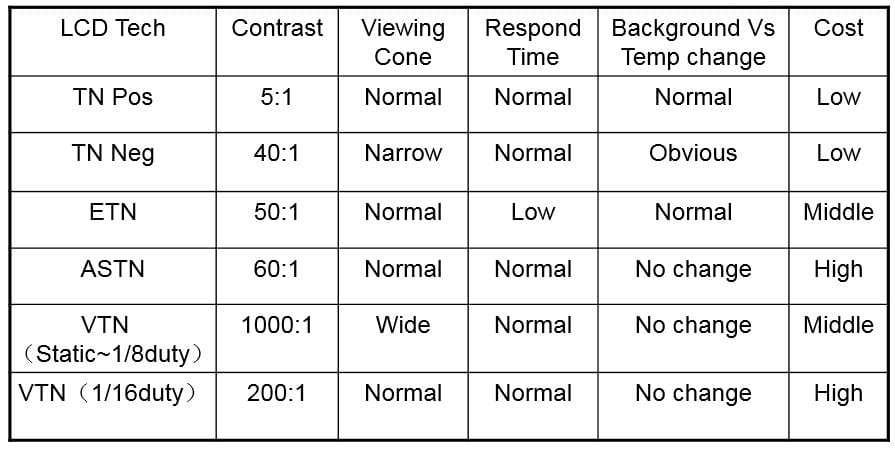
- Ultra-high contrast ratio: >1000:1 if duty < 1/8, >200:1 or higher if 1/16 ≥ duty ≥ 1/8
- Ultra-wide viewing cone
- Temperature-independent background: the black background color does not change between -30°C and 80°C
- Works with any backlight color, since VTN does not rely on a color-casting cell to produce its contrast
- Operating temperature: -20°C to 70°C; storage temperature: -30°C to 80°C
- Contrast ratio: >1000:1
- Duty: static to about 1/5
- Viewing cone at CR ≥ 20:1: vertical +60° to -20°, horizontal ±60°
- Operating temperature: -20°C to 70°C; storage temperature: -30°C to 80°C
- Contrast ratio: >200:1
- Duty: ≤1/160 (segments or dot matrix)
- Operating voltage: 4.5V–8.0V at 1/8 duty, 5.0V–10.0V at 1/16 duty
- Viewing cone at CR ≥ 5:1: vertical +60° to -10°, horizontal ±60°
- Operating temperature: -30°C to 80°C; storage temperature: -40°C to 90°C
- Reliability test: 80°C × 90%RH × 500H
- Contrast ratio: >1000:1
- Duty: static to about 1/4
- Operating voltage: 4.5V–5.0V at 1/4 duty
- Viewing cone at CR ≥ 20:1: vertical +60° to -20°, horizontal ±60°
- Operating temperature: -20°C to 70°C; storage temperature: -30°C to 80°C
- Contrast ratio: >1000:1
- Duty: static; operating voltage 2.6V–4.5V
- Viewing cone at CR ≥ 20:1: vertical ±60°, horizontal ±60° (no dead-spot angle)
- Operating temperature: 0°C to 70°C; storage temperature: -30°C to +80°C
- Duty: static (recommended ≤1/2 for color saturation)
- Contrast ratio: >500:1
- Operating voltage: Vdd 3.0V–5.0V
- Viewing cone at CR ≥ 10:1: vertical +60° to -10°, horizontal ±60°
- Color: up to 8 colors at one segment
Five types of VTN LCD
VTN is not one part, it is a family. The five variants below trade cost, multiplex, operating range, and color against each other, the same way TN, HTN, STN, and FSTN do for twisted-nematic cells. Specs below are typical, not absolute, and vary by design.
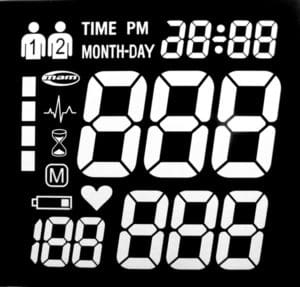
1. General vertical alignment LCD
Designed for low cost and low multiplex applications, driven statically or at a low duty ratio.
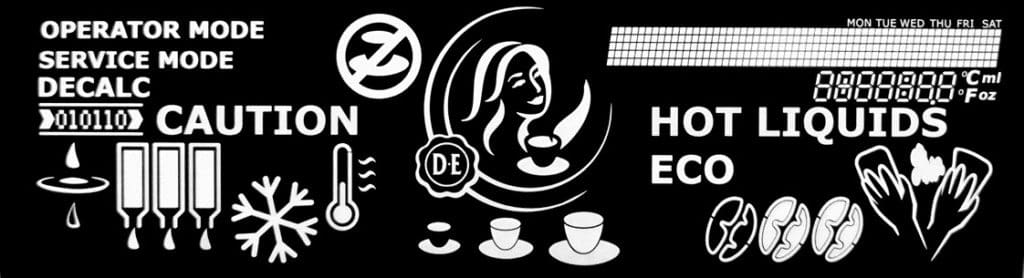
2. High multiplex (duty) vertical alignment LCD
Designed to drive up to 160 multiplexed segments or a dot-matrix display, at the cost of contrast and viewing cone versus the general type.
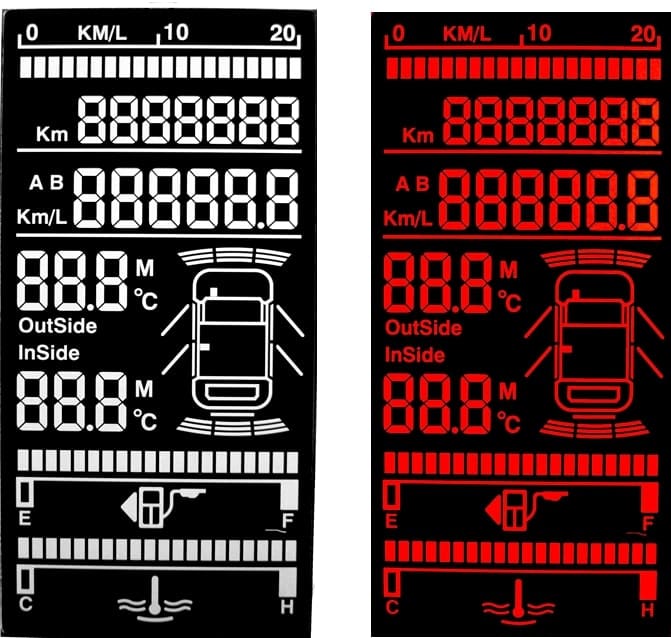
3. High reliability vertical alignment LCD
Designed for harsh environments, most often automotive, with a wider operating and storage range and a documented reliability test.
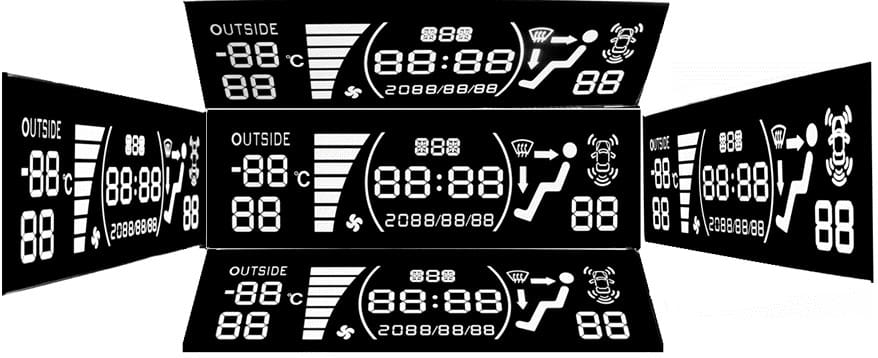
4. Full viewing angle vertical alignment LCD
A standard VTN LCD has a dead-spot viewing angle. This type is designed to keep good contrast across the full viewing range instead.
5. Field-sequential (FS) color vertical alignment LCD
Not a full-color LCD: FS color VTN can realize a maximum of 8 colors at one segment by cycling color fields. Duty should stay at or below 1/2, otherwise color saturation drops.

Applications
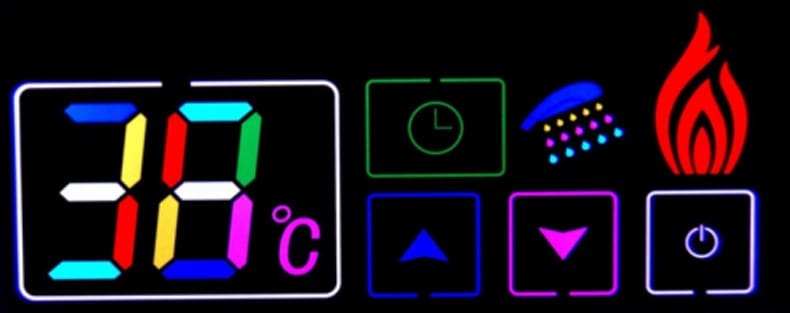
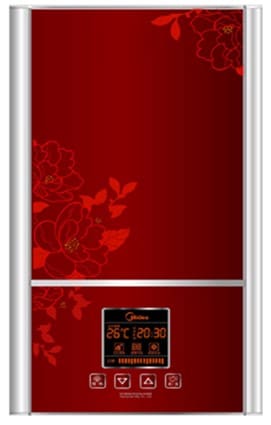
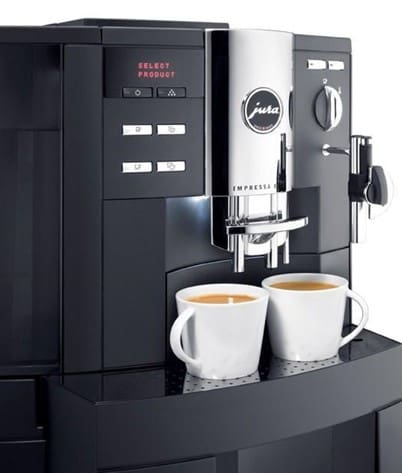
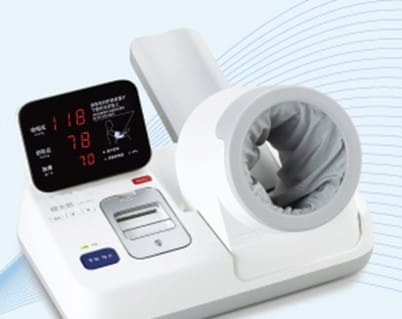
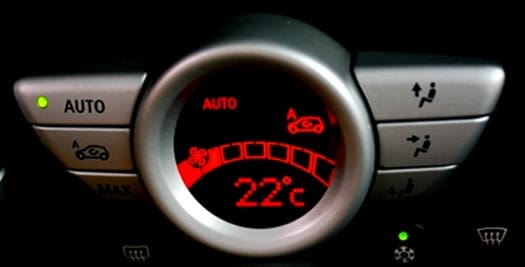
Vertical alignment LCDs are widely used in automotive, appliance, and consumer products, wherever a true black background and high contrast matter more than full color.
Comparison with other LCD technologies
Orient Display builds VTN modules across all five types above, from low-cost general-purpose parts to automotive-grade high-reliability glass, and designs custom VTN glass from concept to production. Browse the VTN vertical alignment LCD product line for part numbers, mode options, and stocked designs.