

Dev-board / Maker TFT
Dev-Board / Maker TFT
Dev-board / maker TFTs are Arduino- and Raspberry Pi-ready displays — wired and driver-supported for prototyping, hobby projects, and evaluation, so you can bring a screen up without designing a custom carrier board first.
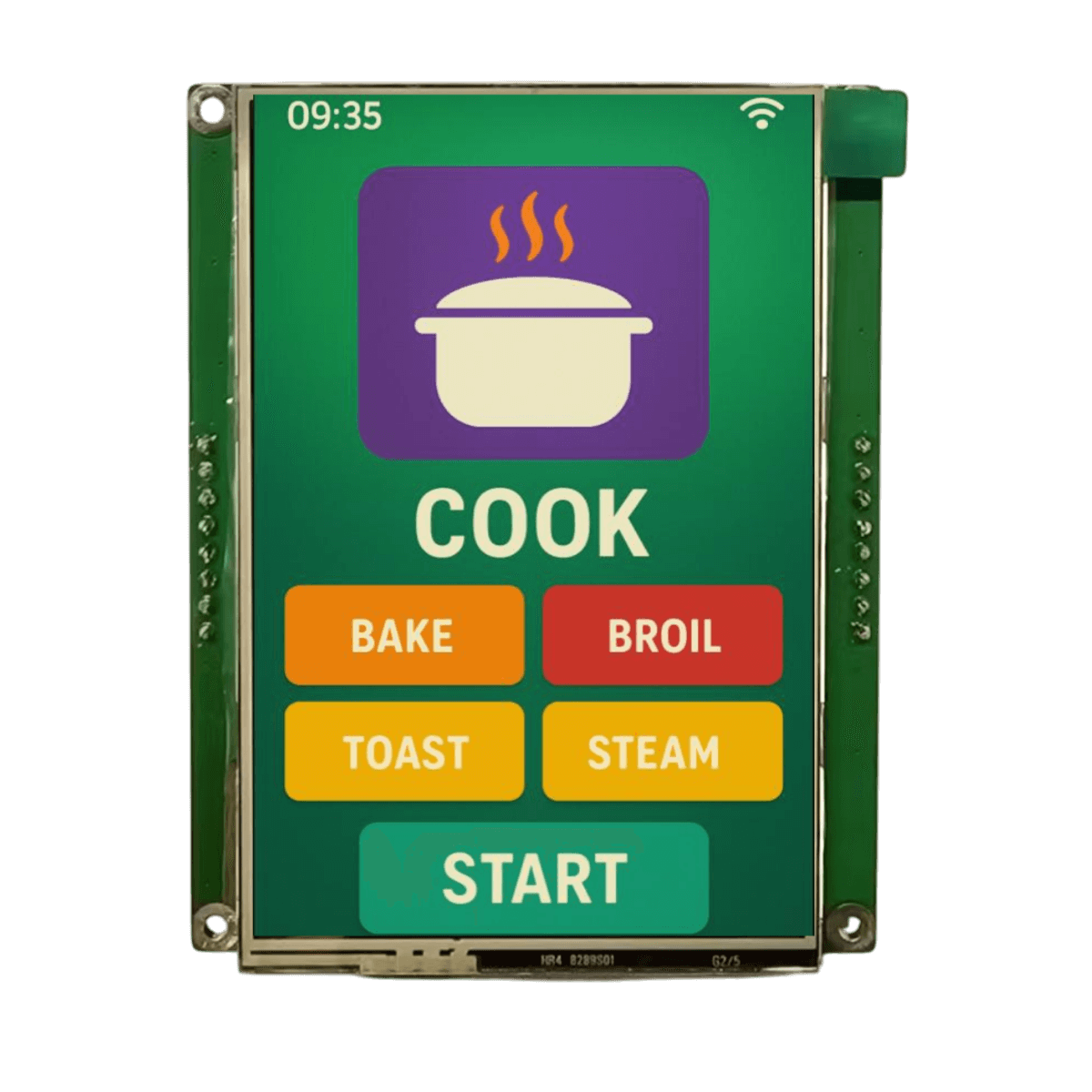
Dev-board / maker TFT specifications
Standard ranges for the Arduino and Raspberry Pi series. For a specific board, interface, or driver, talk to an engineer.
- Arduino series: 0.96″ to 3.2″, 160×80 to 240×320
- Arduino interface: 4-wire SPI, 300 cd/m², IPS and TN
- Arduino driver ICs: ST7735S, ST7789V, ILI9341V, ILI9342C
- Part families: AFL (Arduino), AFK / AFY (Raspberry Pi), JAZZ (demo / eval)
- Raspberry Pi series: 4.3″ to 10.1″, 800×480 to 1280×800
- RPi interface: HDMI + USB (VGA on 5.0″ / 10.1″), 680–900 cd/m²
- RPi touch: resistive or capacitive
- Compatibility: demo / eval boards are distributed by OD and work with OD panels
Where it fits
Typical applications: prototyping and proof-of-concept, education and maker projects, and pre-production evaluation of an OD panel before committing to a production part.
How it differs from the other TFT families: a dev board is wired and driver-supported so a screen comes up on an Arduino or Raspberry Pi without a custom carrier. For the production panel behind a prototype, see standard TFT panels; when direct-sun legibility is the requirement, see sunlight-readable TFT; for an onboard controller and a simple serial interface, see embedded TFT modules; for a non-rectangular outline, see round and bar TFT; and when touch input is the driving requirement, see TFT with touch.
The family, small to large


Learn more before you buy
Background on driving a display from a dev board.
Embedded Display Modules Explained
How a driver-supported board brings a panel up without a custom controller design.
Read the guideChoosing a Display Interface
SPI on Arduino, HDMI on Raspberry Pi — matching the interface to your host board.
Read the guideWhat Is a TFT Display
How an active-matrix TFT panel is built and driven, on the bench or in production.
Read the guideDisplay Interface Quick Reference
A one-page lookup for the interfaces and driver ICs a dev board exposes.
Read the guideReady to bring up a display on your board?
Tell us the host board and the panel you want to prototype — we can point you at the right dev board and driver, and at the production part it maps to when you are ready to move on.