

Manufacturing & capabilities
Manufacturing & capabilities
Orient Display manufactures custom LCD, OLED, TFT and touch displays at production scale, with in-house engineering that takes a program from concept to a manufacturable spec. This page covers the manufacturing capacity, process control and design-in support behind a custom program: the things an engineer weighs before committing a build, written for the engineer specifying it, not a company brochure.
What we manufacture
One supplier across the display stack, so a module does not have to be integrated across three vendors.
Displays
Monochrome and graphic LCD, character LCD, TFT (standard, round, bar, sunlight-readable), OLED and e-paper — custom and semi-custom.
Browse product families →Touch
Projected-capacitive and resistive touch, sensor design and lamination, tuned to the cover lens and stack-up for your enclosure.
Touch capabilities →Backlights & optics
LED backlight design for brightness, uniformity and power, including high-brightness sunlight-readable and wide-temperature builds.
See options →Integrated modules
Display, touch, cover lens, backlight, PCB, connector and controller assembled and tested as one qualified module — a single part number, a single supplier.
Start a module build →Built at production scale, across multiple sites
Page-specific manufacturing proof — distinct from the company-scale credibility figures on the homepage.
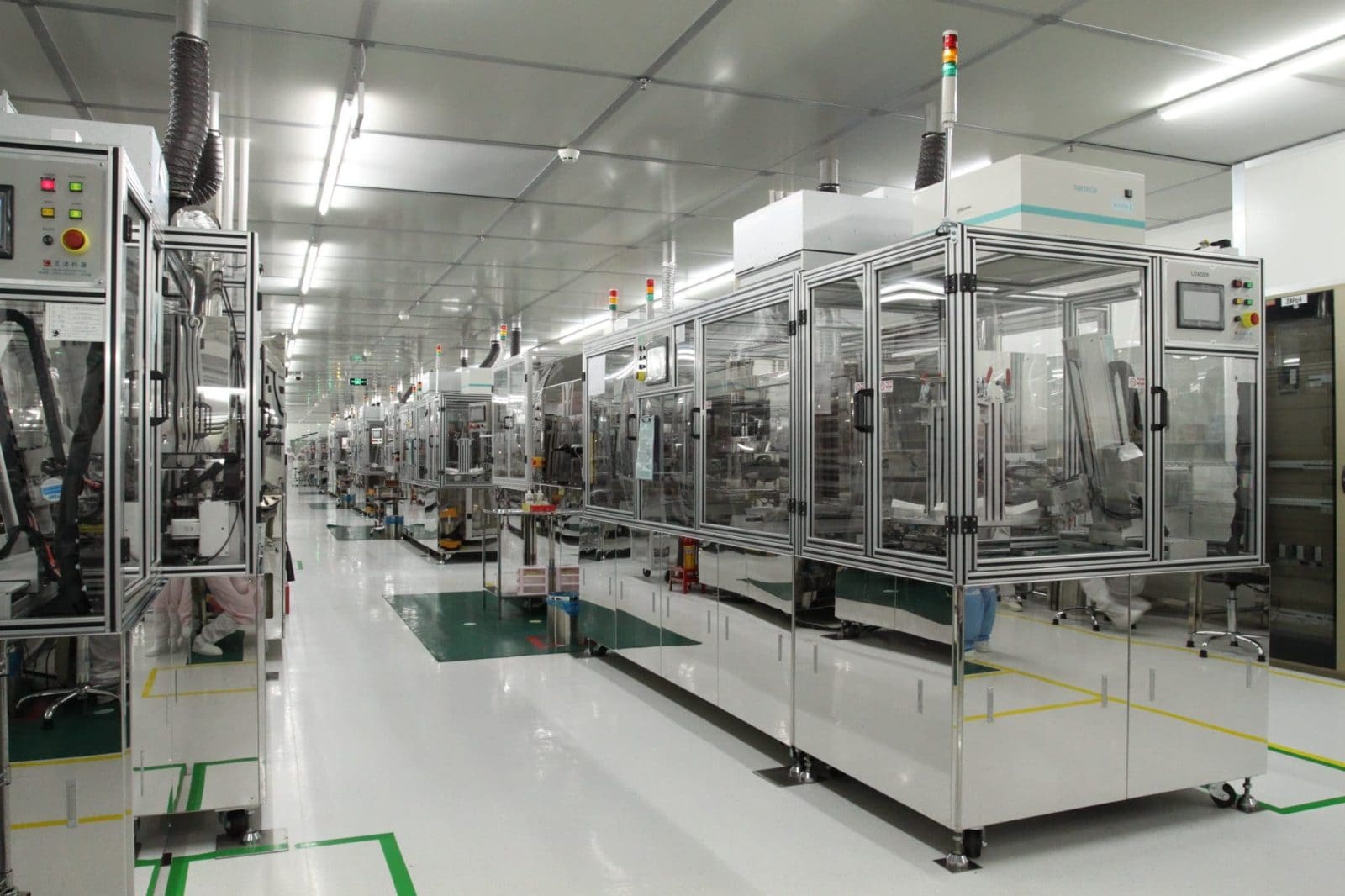
Orient Display manufactures custom LCD, OLED, TFT and touch displays at production scale across multiple qualified manufacturing sites, so a program is matched to the site and line that fit it rather than squeezed onto a single one. Specific annual-output figures for your program are provided on request.



Design-in & engineering
The reason a custom program is worth doing here rather than sourcing a catalog part — written as what it does for your schedule and cost.
Concept → manufacturable spec
Engineers take a sketch, a datasheet target, or a competitor part and work it into a spec that actually builds — interface, stack-up, optical and mechanical constraints resolved before tooling is cut. You keep a consistent technical contact through the design-in cycle, so the person answering in month six knows the decisions from month one.
Custom without the ground-up cost
Most custom projects start from a proven standard product and add modifications, so tooling typically runs $5K–$10K rather than the $250K+ a ground-up design carries. The engineering conversation is about which path fits — not a default to the most expensive one.
Breadth to solve the hard part
Displays fail at the boundaries between disciplines — optics, materials, chemistry, electronics, thermal. Our engineering bench spans those, so a readability, adhesion or wide-temperature problem is solved in-house instead of bounced between suppliers. The large majority of the work is custom OEM, not catalog fulfilment.
Lead times you can plan around
Stated ranges, the same across every Orient Display reference, so a program plan holds.
| Stage | Typical lead time | Notes |
|---|---|---|
| Samples | 3–6 weeks | From an approved spec. In-stock standard samples ship from US inventory in 24 hours. |
| Production | 4–8 weeks | After sample approval and PO. |
The quality system in practice
The controls that run on the line. The certificates behind them are on the Certifications & Quality page; this is how they show up in a build.
Why process capability matters to your yield
| Process capability (Cpk) | Defects (approx.) | What it means |
|---|---|---|
| 1.00 | ~2,700 ppm | Barely capable — the process edge touches the spec limit. |
| 1.33 | ~63 ppm | The common minimum a customer quality plan asks for. |
| 1.67 | ~0.6 ppm | Comfortable margin, typical target for a critical characteristic. |
| 2.00 | ~0.002 ppm | Six-sigma capability. |
Standard delivery specifications
The cosmetic and functional acceptance criteria a build is inspected and accepted against, issued for your program on request.
Passive LCD
The cosmetic and functional acceptance criteria — cosmetic zones, allowable dot/line defects, contrast and appearance — that a passive LCD build is inspected and accepted against.
TFT LCD
The equivalent acceptance specification for TFT modules — pixel-defect limits by zone, mura/uniformity, and cosmetic criteria — issued for your program on request.
One program, multiple sites
Production is not tied to a single line. Spreading a program across qualified sites is what keeps a single disruption from stopping your build — and lets a project scale without re-qualifying from scratch. The sourcing and continuity detail lives on its own page.
Manufacturing FAQ
What are your lead times?
Samples in 3–6 weeks from an approved spec, production in 4–8 weeks after sample approval. In-stock standard samples ship from US inventory within 24 hours. There is no standard MOQ — quantity is set by the build.
How much does custom tooling cost?
Most custom projects start from a proven standard product, so tooling typically runs $5K–$10K rather than the $250K+ of a ground-up design. An engineer will tell you which path fits before you commit.
Do you have the capacity for a Fortune-500-volume program?
Yes. Orient Display manufactures at production scale across multiple qualified sites, including three IATF 16949 automotive plants that supply automotive display programs at volume. Specific annual-output figures for your program are provided on request.
Can you support the design, not just build to print?
Yes. The large majority of the work is custom OEM: engineers take a concept to a manufacturable spec, resolve the optical, mechanical and interface constraints, and keep a consistent technical contact through the design-in cycle.
What quality certifications back the manufacturing?
IATF 16949 (automotive), ISO 9001, ISO 13485 (medical QMS), IECQ QC 080000, ISO 14001 and ISO 45001, plus RoHS, REACH and UL. Details, scope and the actual certificates are on the Certifications & Quality page.
Have a program to build?
Start with an engineer, not a form. Tell us the target and the constraints, and we will tell you the path, the tooling, and the lead time.