

Blog
A Novel LCD Backlight Design

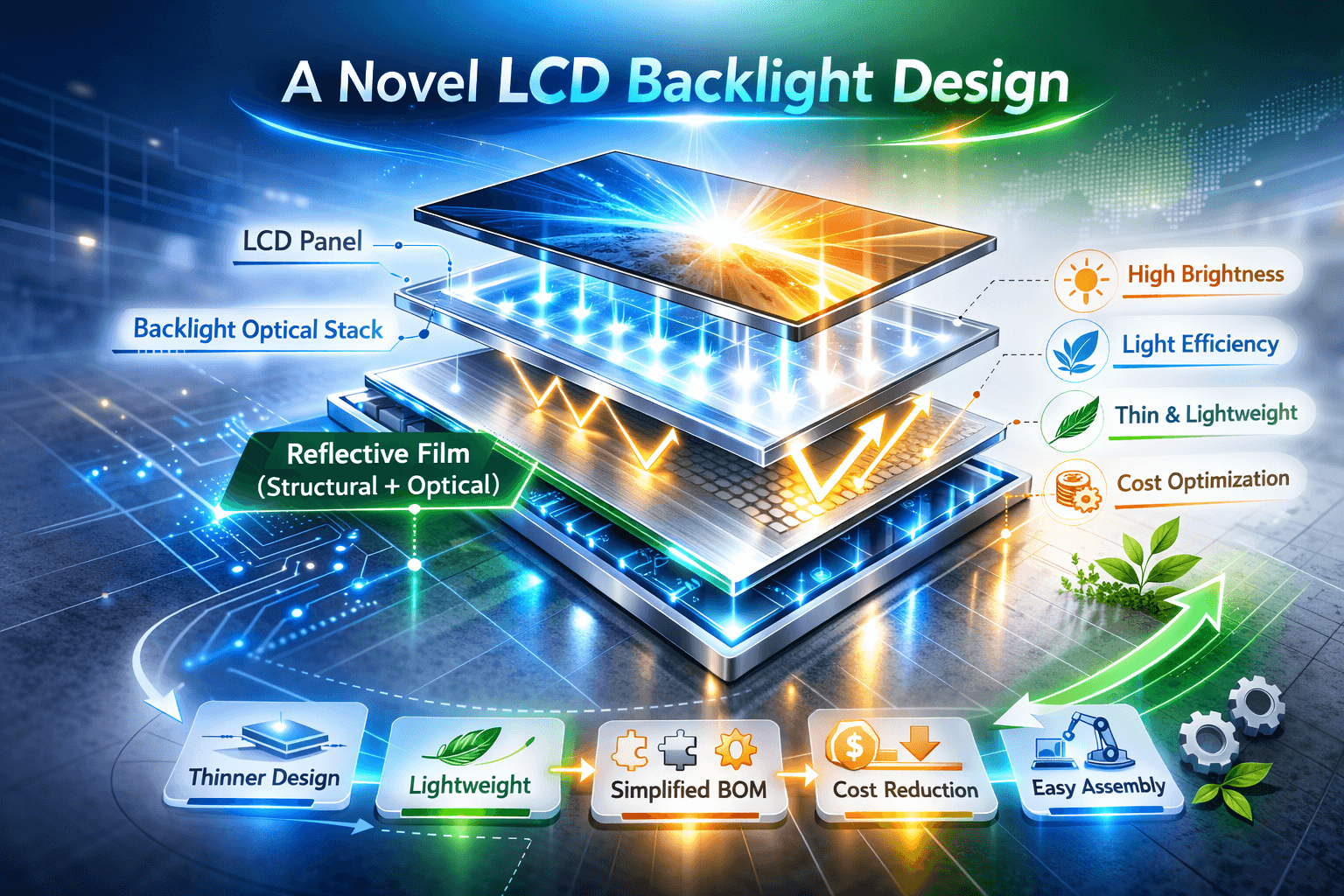
A reflective film is an optical component used within a display’s backlight assembly to recycle light and increase brightness/efficiency, whereas a plastic backlight is a type of complete backlighting unit structure, often utilizing an edge-lit design with light guide plates and various films, including a reflective film as its bottom layer.
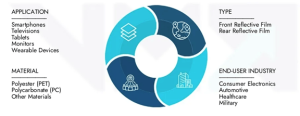
The Optical Reflective Film for Liquid Crystal Display (LCD) market refers to a specialized segment in the electronics and display technology industries, driven by the growing demand for high-quality visual experiences. Optical reflective films are primarily used in LCD panels to improve their brightness and contrast by reflecting and optimizing light. These films contribute to enhancing the clarity, color accuracy, and overall display performance of devices like televisions, smartphones, tablets, and monitors. The global demand for such technology has surged in recent years, as consumers and businesses alike seek displays with superior image quality and energy efficiency.
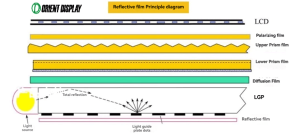
Traditional Module Structure
- LCD Glass
- Backlight Optical Stack
- Backlight Reflector Sheet
- Plastic Frame / Plastic Housing
- Metal Back Plate
Functional separation
- Optical function: Backlight reflector
- Structural function: Plastic frame
- Encapsulation function: Frame + back shell
Reflective Film Bottom Design (Intergraded Structure)
- LCD Glass
- Backlight Optical Stack
- Reflective Film (Structural + Optical)
- Integrated Sealing Layer (No Plastic Frame)
Integrated Functionality
- Optical Reflection
- Bottom Packaging
- Structural Support
- Module Fixing
- Thickness Control
In order to achieve below Engineering Objectives
- Module thinning design
- Lightweight structure
- Simplified BOM structure
- Optimized cost structure
- Automation-friendly assembly
- Integrated module design
Overall, compared with a conventional plastic backlight housing, the reflective-film bottom design achieves a thinner profile and lower weight, while the plastic backlight structure provides higher mechanical robustness.
Q&A for Reflective Film Bottom design
Question 1: Are the Reflective film bottom design meets structural strength and aging resistance requirements?
Answer: It meets the requirements. The structural strength must not only be provided by the LCD module itself, but the overall structure of the complete device housing must also protect the LCD module. In terms of aging test, it is no different from products with plastic frame bottom sealing.
Question 2: Is it able to meet the compatibility of thermal expansion and contraction?
Answer: Yes, Orient Display factory able to meet this requirement.
Question 3: Is the Reliability testing (vibration, drop, thermal cycling), will also be performed for reflective film bottom design LCD?
Answer: Yes, Orient factory able to perform the same Reliability test accordingly.
Question 4: Is the reflectivity able meet the backlight luminous efficacy requirements?
Answer: Yes, we can meet this requirement.
Question 5: Is the bottom sealing structure able to meet IP protection design requirements?
Answer: There is no problem with dust protection. However, the waterproof performance of an individual product is slightly worse than that of a product with a sealed bottom frame. If the entire machine is properly protected, the performance is the same.
If you have any questions, please contact our engineering.
